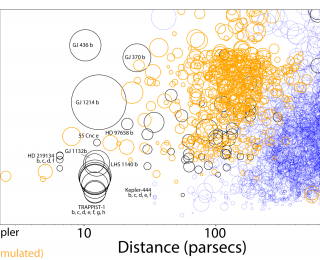
Predicting the number of planets from TESS
NASA’s TESS spacecraft has launched! Today’s paper predicts how many exoplanets it will find.

NASA’s TESS spacecraft has launched! Today’s paper predicts how many exoplanets it will find.
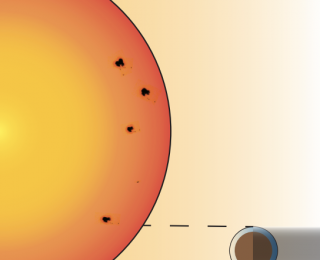
If we don’t understand starspots, we won’t understand exoplanet atmospheres.
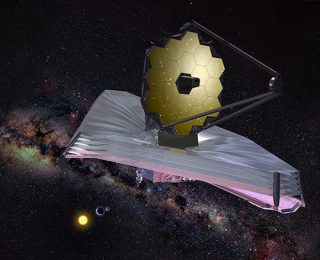
With the imminent launch of the James Webb Space Telescope next year, many scientists are asking what is next? Today’s bite, which focuses on a recent workshop on global coordination: future space-based Ultraviolet-Optical-Infrared Telescopes, hopefully represents the first steps towards the next big space telescope.
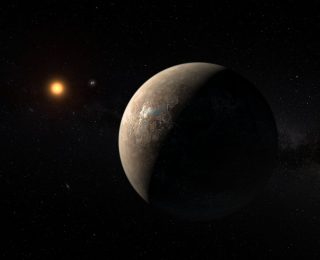
Researchers have devised a technique using JWST that could potentially reveal the presence of carbon dioxide on the nearby exoplanet Proxima Centauri b.
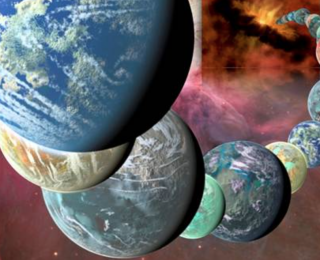
The authors of today’s astrobite try and assess how much knowledge you can actually gain about the first four Harry Potter books by only watching the fourth movie. In other words, what can you learn about planet formation by looking at observations of exoplanets?
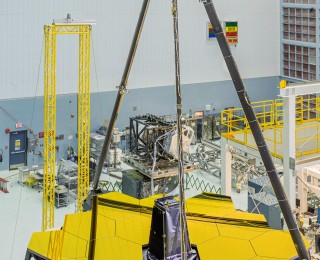
The James Webb Space Telescope will be the largest space observatory built to date. The authors of today’s paper suggest one possible use for the giant new telescope: Searching for signs of life on other planets.