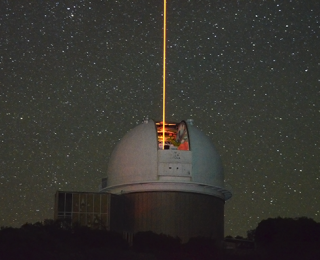
Optics to outrace them all
Astronomers are using a once-secret technology to scrutinize Kepler stars. Are rocky planets headed for a takedown?

Astronomers are using a once-secret technology to scrutinize Kepler stars. Are rocky planets headed for a takedown?
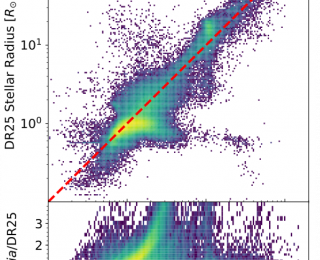
Using new Gaia data, the authors update the stellar radii for the majority of Kepler’s stars. While they find that most stars have similar radii to previous reported values, there are some large discrepancies.
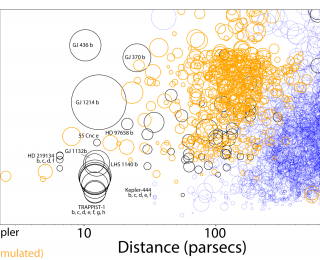
NASA’s TESS spacecraft has launched! Today’s paper predicts how many exoplanets it will find.
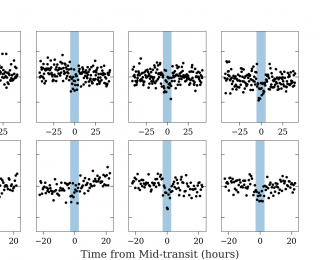
Statistical confirmation of long-period, low SNR candidates should be taken with a grain of salt. The reliability is too low to confirm individual systems without followup observations and the 99% confidence validation of Kepler-452b is likely closer to 90%.

The new high-resolution, hydra-headed PEPSI spectrograph is now in operation. One of the first targets it investigated is an ancient, planet-hosting star.

Tabetha Boyajian calls it “the most mysterious star in the universe.” Has she figured it out?