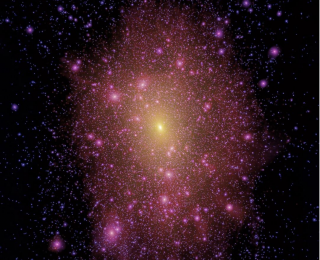
Stellar Streams & The Nature of Dark Matter
Will future telescopes reveal the nature of dark matter imprinted in the stellar streams stretched around our galaxy?

Will future telescopes reveal the nature of dark matter imprinted in the stellar streams stretched around our galaxy?
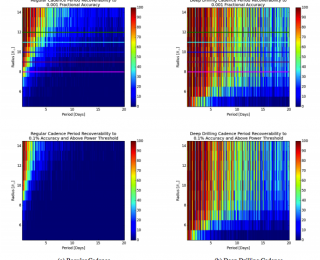
This month’s undergraduate research post features a student who looked at how well LSST will be able to detect transiting exoplanets. Read on to find out what she learned!
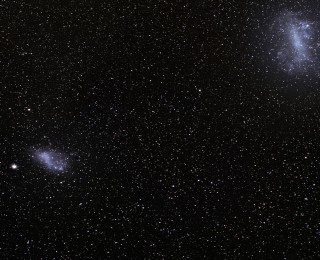
There is quite a lot left to learn about the smallest galaxies in our Universe, dwarf galaxies. Since they are small compared to galaxies like the Milky Way, they are challenging to observe directly, either because they are too dim or because they are too small to be resolved. The authors suggest a new detection method for these faint galaxies that takes advantage of ongoing and upcoming large surveys looking for, among other things, novae and supernovae.

Can photometric redshifts be used to probe the galaxy luminosity function with the same accuracy as spectroscopic redshifts? This paper’s authors say the answer is yes.

Large sky surveys like SDSS and 2MASS have become widely successful and have prompted a next generation of dedicated survey telescopes like LSST, the Dark Energy Survey, and Pan-STARRS. These telescopes will unleash a tidal wave of data into astronomers’ open arms (or external hard drives). But how do you catch a tidal wave?