• RSS
  • Submit a Guest Post
  • Undergraduates: Submit your Research!
  • Suggest a Paper Topic!
astrobites
  • About
    • About Astrobites
    • Meet the Authors
    • Statement of Inclusivity
    • Copyright & Permissions
  • Latest Research
    • Daily Paper Summaries
    • Classics
    • Undergrad Research
    • Physical Review Coverage
  • Beyond astro-ph
    • Beyond astro-ph Library
    • Interviews
    • Career Navigation
    • Personal Experiences
    • Current Events
    • Teaching with Astrobites
  • Guides
    • EM Spectrum
    • Galaxies & AGNs
    • Spectroscopy and Spectral Lines
    • Adaptive Optics
    • Gravitational Waves
    • Transient Astronomy
    • Astrophysical Software
    • Graduate School
    • Writing a personal statement for grad apps
    • First Observing Run
    • …More Guides!
Select Page
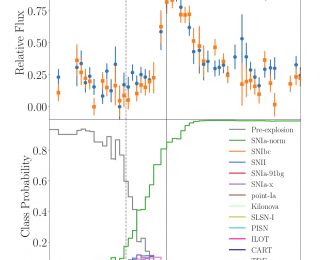
Is That a Supernova? Classifying Transients in Real-Time with Machine Learning

Is That a Supernova? Classifying Transients in Real-Time with Machine Learning

by Michael Foley | Jun 7, 2019 | Daily Paper Summaries

A neural network enables transient classification with ongoing observations, potentially providing astronomers with more time to study the transient while it is still occurring.
How to Read (LSS)Tea Leaves to Better Understand Dark Energy

How to Read (LSS)Tea Leaves to Better Understand Dark Energy

by Tarini Konchady | Jan 31, 2019 | Daily Paper Summaries

How would the LSST have to survey the sky in order to study dark energy?
Meet the AAS Keynote Speakers: Dr. Alexander Szalay

Meet the AAS Keynote Speakers: Dr. Alexander Szalay

by Stephanie (Hamilton) Deppe | Jan 3, 2019 | Current Events

The era of petabyte and exabyte astronomical surveys is rapidly approaching. How will we store all this data and ensure its longevity for future decades of astronomers? Check out Dr. Alex Szalay’s plenary talk at #AAS233 to find out!
Capturing Interstellar Wanderers

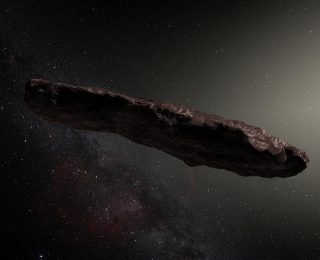
Capturing Interstellar Wanderers

by Peter Sinclair | Dec 26, 2018 | Daily Paper Summaries

Could studying ʻOumuamua help us identify objects in our own solar system which came from deep space?
How Many Planets Will We Find Around White Dwarfs?

How Many Planets Will We Find Around White Dwarfs?

by Matthew Green | Oct 4, 2018 | Daily Paper Summaries

We know that white dwarfs have planets, but there are very few that we have detected directly. An upcoming survey may change that.
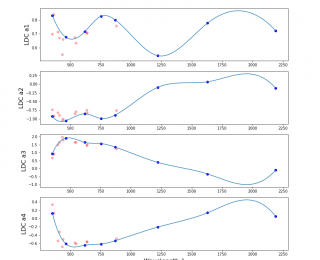
Finding New Limb-Darkening Coefficients for the LSST

Finding New Limb-Darkening Coefficients for the LSST

by Astrobites | Sep 15, 2018 | Undergraduate Research

Check out some undergraduate research highlights!

« Older Entries
Next Entries »

Loading

Follow our socials

  • Bluesky
  • Facebook
  • Instagram
  • RSS Feed

More Posts About

AAS AGN astronomy astrophysics binary stars black holes cosmology dark matter dwarf galaxies exoplanets galaxies galaxy evolution gravitational waves habitability JWST Kepler Milky Way observations planetary science planet formation protoplanetary disks radio astronomy simulations solar system spectroscopy star formation stars stellar evolution supernovae theory

Posts by Category

  • Accessibility
  • Applications
  • Beyond
  • Book Reviews
  • Career Navigation
  • Classics
  • Climate Change
  • Course Assignments
  • Crossposts
  • Current Events
  • Daily Paper Summaries
  • Game Reviews
  • Guides
  • Historical Astronomy
  • Instrumentation
  • Interviews
  • Outreach
  • Personal Experiences
  • PRJ
  • Quick Notes
  • Satellites
  • Teaching
  • Undergraduate Research

More Astronomy

  • AAS
  • AAS Nova
  • astro-ph
  • AstroBetter
  • APOD

Read Astrobites in Other Languages

  • Astrobitos (Spanish)
  • Astropontos (Portuguese)
  • staryab (Farsi)

Listen to Astrobites

  • astro[sound]bites

Discover More Incredible Science

  • ScienceBites Network
  • RSS

© 2026 Astrobites | All Rights Reserved | Supported by AAS | Designed by Elegant Themes | Powered by WordPress