Details at a distance
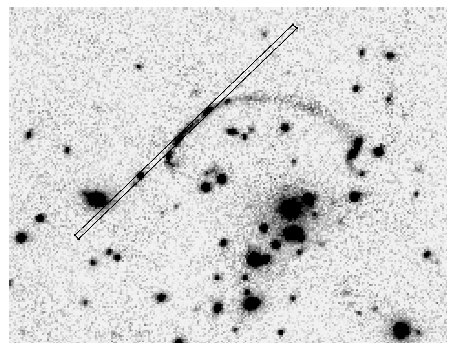
In this paper, the authors seek to explore the properties of star-forming galaxies by looking at a lensed galaxy. This galaxy has been distorted into a giant arc by the gravitational potential of a foreground galaxy cluster.

In this paper, the authors seek to explore the properties of star-forming galaxies by looking at a lensed galaxy. This galaxy has been distorted into a giant arc by the gravitational potential of a foreground galaxy cluster.
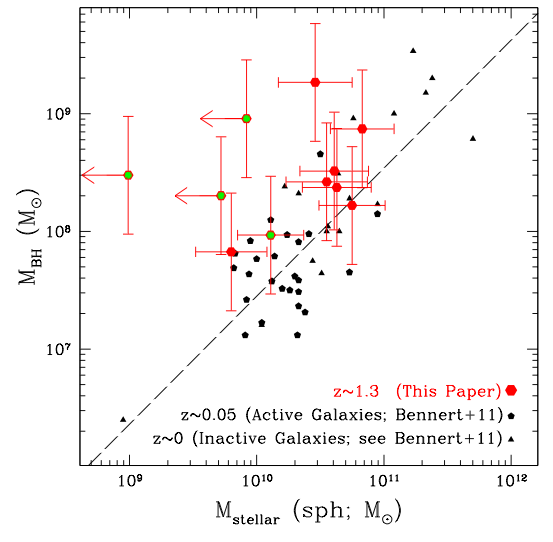
It is currently accepted that most, if not all, galaxies have a black hole smack dab in their center. These black holes are mind bogglingly massive – think millions to billions of suns! This paper focuses on whether the black holes grow before stars group on galactic scales to form the galaxy.
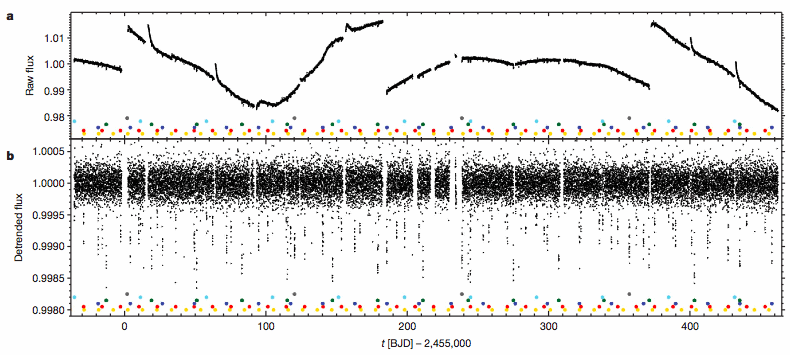
Following the data release, a slew of Kepler papers went up on astro-ph this evening. In my previous post, I went straight to the numbers, but here I’ll discuss the Kepler mission and data in some depth, which I think will generally be useful for understanding current and future Kepler results.
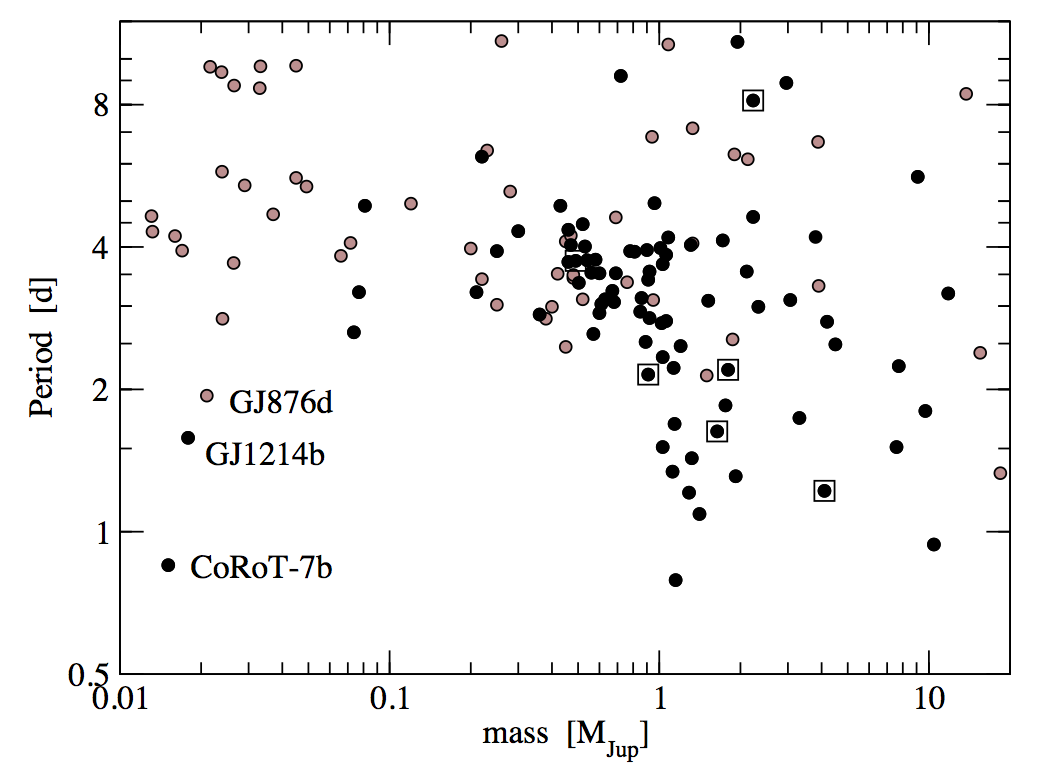
One of the most exciting and fastest growing subfields of astronomy is the detection and study of extrasolar planets. The authors of this paper seek a physical explanation for a noticeable “step” in the mass-period distribution of short-period planets by running several hydrodynamic simulations.
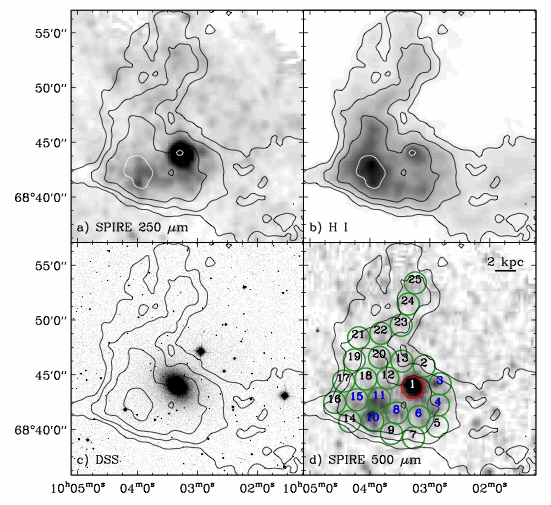
The interacting galaxies in the M 81 triplet are interconnected by tidal features. In this work, the authors study dust in the NGC 3077 tidal stream and discuss its implications.
Assuming every star in a cluster has the same age and metallicity is a powerful simplification, but it may not be true.