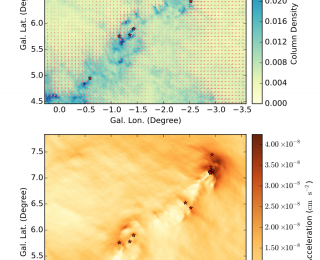
Mapping Gravity in Stellar Nurseries
Gravity turns gas into stars. Today’s astrobite introduces a new way to study gravity’s pull in a molecular cloud – the birthplace of new stars.

Gravity turns gas into stars. Today’s astrobite introduces a new way to study gravity’s pull in a molecular cloud – the birthplace of new stars.
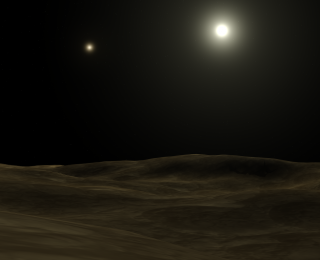
Most stars—including Polaris, Sirius, and those in Orion’s Belt—actually hide multiple stars. Some of these stars are on orbits so wide that they may no longer be gravitationally bound. Why?
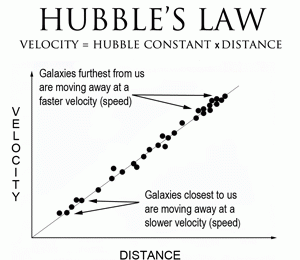
New supernovae measurements and precise distance calculations lead to an interesting conflict in cosmological parameters in the universe, depending on whether a tool is used to probe the local or the distant universe. Read on to find out how!
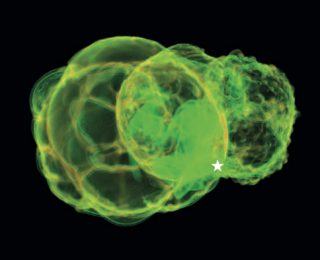
A cosmic orchestra of nearby supernova explosions created the ‘Local Bubble’ all around us. Could these stellar super-bombs have influenced Earth’s climate and even human evolution?
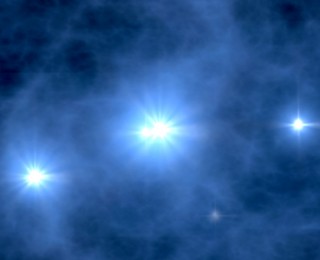
Our Sun’s ancestors are thought to form out of the primordial composition of the early Universe, almost pure hydrogen and helium. How likely are we to observe such stars?
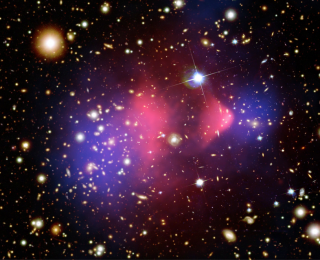
This article explores the utility of galaxy clusters as a probe for precision cosmology, by reviewing some of the seminal literature in the field. Somewhere along the way, a symphony is heard.