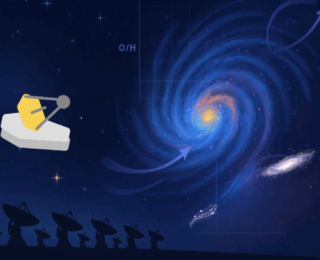
Fast metal factories at z ~ 5, lessons from ALPINE-CRISTAL-JWST
JWST reveals galaxies that built up heavy elements at record speed, reaching near-modern metallicities only a billion years after the Big Bang.

JWST reveals galaxies that built up heavy elements at record speed, reaching near-modern metallicities only a billion years after the Big Bang.
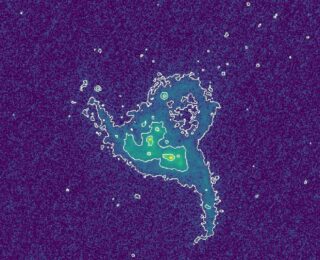
Three active black holes, tangled jets, and fading light. This galaxy merger is a cosmic drama in action.
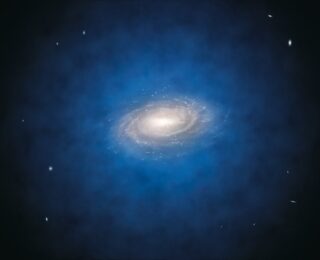
Today’s paper shows us how to repurpose microlensing surveys to study clumps of dark matter drifting through space.

What does the surface of a red supergiant star look like? It’s no polarising statement to say that it has more in common with a pot of bubbling soup than you might think!

You think stars form quietly? Think again. In the early universe, galaxies were packed with star-forming clumps. Some disrupted quickly, while others survived. Today’s paper reveals which lived and which died young.
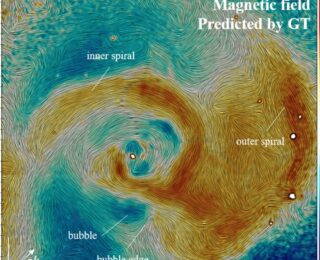
In today’s paper, the authors use their Gradient Technique to estimate the plane of sky magnetic fields in several bright clusters.