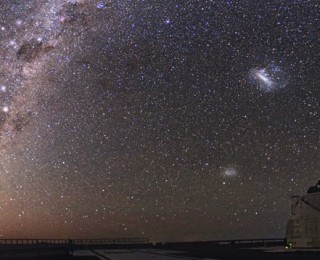
The Milky Way’s Alien Disk and Quiet Past
The Milky Way grew by accreting many smaller galaxies. What did these doomed galaxies leave behind, and what could they say about the Milky Way’s early past?

The Milky Way grew by accreting many smaller galaxies. What did these doomed galaxies leave behind, and what could they say about the Milky Way’s early past?
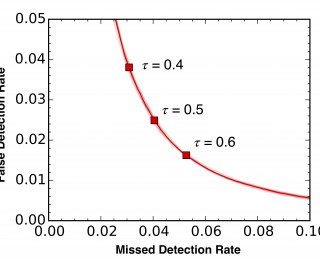
AutoScan was able to correctly identify real sources in the validation set 96% of the time, with a false detection (claiming an artifact to be a source) rate of only 2.5%.
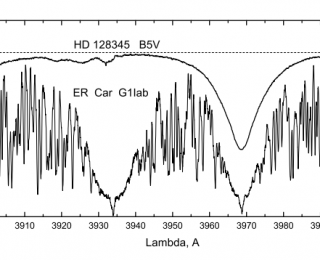
Cepheids are bright enough that we can use them to measure distances to other galaxies, but their luminosities also makes detecting their companions particularly difficult. So how do astronomers find their uncover their secret partners? Today’s paper takes a look…
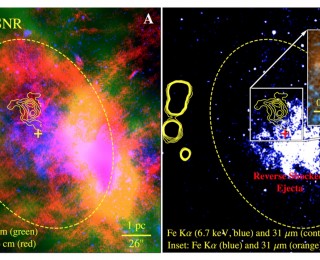
Observations of dust near the remains of a supernova in the center of our galaxy could have implications for dust production in the earliest galaxies.
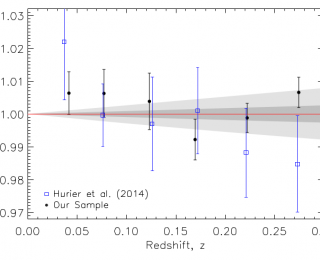
How can we measure the temperature of the Universe across cosmic epochs? Recent data from Planck suggests that the Universe’s cooling history is consistent with the Big Bang model.
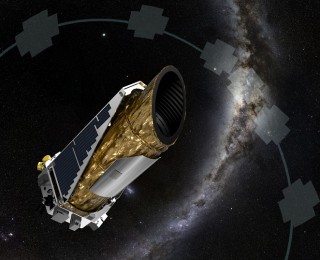
A new analysis technique, that fits simultaneously for light-curve systematics and transit signals, finds 36 planet candidates in the K2 dataset — Kepler is still in the game!