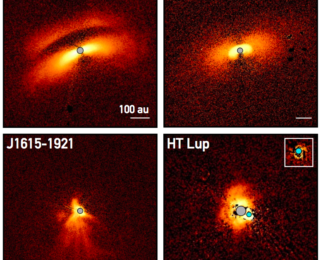
A New, Scattered-Light View of Planet-Forming Disks
New scattered-light images reveal striking substructure in circumstellar disks around nearby low-mass stars.

New scattered-light images reveal striking substructure in circumstellar disks around nearby low-mass stars.
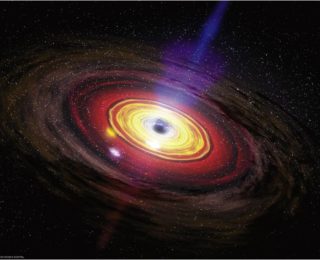
We all know planets form around stars, can planet formation occur around something much more exotic?
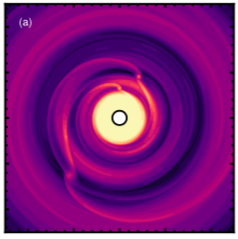
We have found thousands of fully-formed planets, but how do we go about finding those that are hiding in their disks?
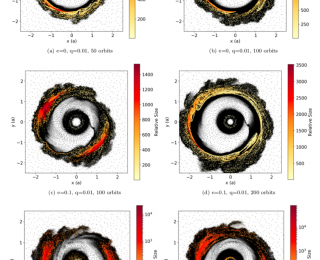
Exoplanets have been the proverbial apples of astronomers’ eyes for some time now. But what about planets that orbit not one star, but two? Read today’s astrobite to learn more about where and how such planets form!
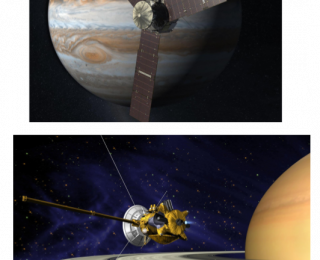
How does gravity tell us about the winds in a planet’s atmosphere? Read on to find out!
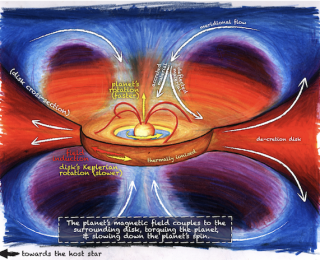
Our gas giants spin slower than one might expect. Turns out gas giants outside of our solar system are also slower than originally what we might have thought! Today’s astrobite answers the question: What’s up with dat?