Rethinking the Planet Formation Deadline
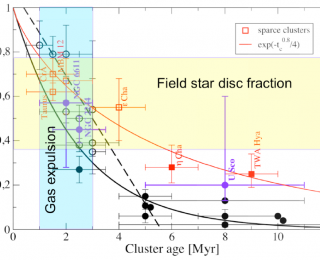
Observational biases may significantly underestimate the lifetime of protoplanetary disks.

Observational biases may significantly underestimate the lifetime of protoplanetary disks.
Of all the kinds of planets we’re finding around other stars—hot Jupiters and mini-Neptunes and those dubiously called “Earth-like”—super-Earths orbiting close to their stars are among the most abundant. While planets so close to their stars are poor candidates for habitability, they are important to understanding the possibility of other habitable planets in these seemingly common systems.
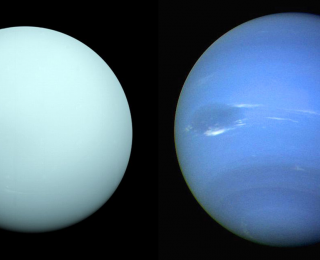
A new hypothesis posits that the ice giant planets formed between the CO and N2 icelines in the Solar System’s protoplanetary disk.
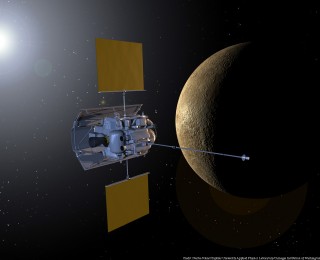
A new model explains Mercury’s major density with magnetism.
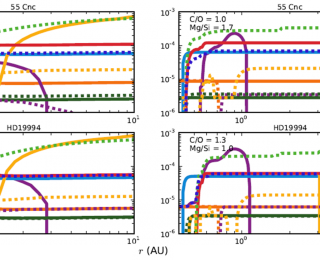
A new model simulates the composition of growing planetesimals in an evolving protoplanetary disk. The model predicts that carbon-rich terrestrial planets can form more easily than previously thought.
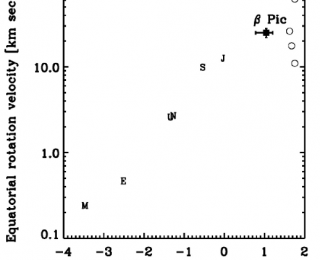
Planets in the Solar System with a higher mass spin faster than lower-mass planets. But what about planets in other systems? The authors of this paper make the first measurement of an exoplanet’s spin to compare its spin and mass to Solar System planets.