• RSS
  • Submit a Guest Post
  • Undergraduates: Submit your Research!
  • Suggest a Paper Topic!
astrobites
  • About
    • About Astrobites
    • Meet the Authors
    • Statement of Inclusivity
    • Copyright & Permissions
  • Latest Research
    • Daily Paper Summaries
    • Classics
    • Undergrad Research
    • Physical Review Coverage
  • Beyond astro-ph
    • Beyond astro-ph Library
    • Interviews
    • Career Navigation
    • Personal Experiences
    • Current Events
    • Teaching with Astrobites
  • Guides
    • EM Spectrum
    • Galaxies & AGNs
    • Spectroscopy and Spectral Lines
    • Adaptive Optics
    • Gravitational Waves
    • Transient Astronomy
    • Astrophysical Software
    • Graduate School
    • Writing a personal statement for grad apps
    • First Observing Run
    • …More Guides!
Select Page
How Did Tatooine Form?

How Did Tatooine Form?

by Nick Ballering | Oct 7, 2013 | Daily Paper Summaries

Dust traps may be the key to forming Kepler-16b and other circumbinary planets.

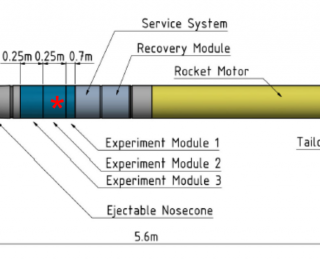
Dust in SPACE: Studying the growth of planetesimals with a suborbital rocket experiment

Dust in SPACE: Studying the growth of planetesimals with a suborbital rocket experiment

by Kirit Karkare | Aug 20, 2013 | Daily Paper Summaries

By sending a chamber of dust on a suborbital ballistic rocket, the authors of this paper hope to find out how planetesimals form.
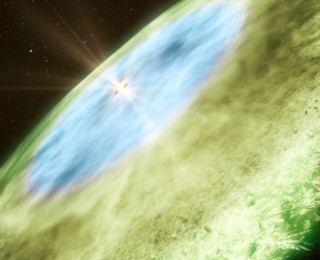
Imaging a CO snow line with ALMA

Imaging a CO snow line with ALMA

by Jessica Donaldson | Aug 7, 2013 | Daily Paper Summaries

Astronomers imaged a snow line in a protoplanetary disk with ALMA – a step towards a better understanding of the theory of planet formation.
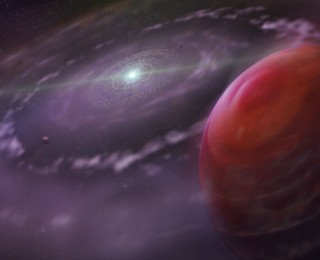
A Core Matter

A Core Matter

by Nick Ballering | Jul 15, 2013 | Daily Paper Summaries

The mass of the cores of giant planets affects their luminosity after formation, complicating how we determine the mass of directly imaged planets.
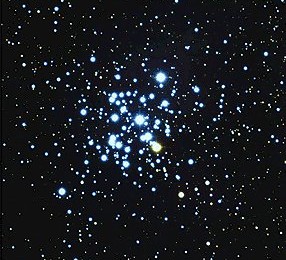
The strength of planet formation: planets found in dense star clusters

The strength of planet formation: planets found in dense star clusters

by Jessica Donaldson | Jul 10, 2013 | Daily Paper Summaries

The recent discovery of two planets in an open star cluster implies that planet formation can survive the harsh environments of a dense stellar cluster.

Recap of the IAU Planet Formation Symposium

Recap of the IAU Planet Formation Symposium

by Nick Ballering | Jun 17, 2013 | Current Events

Highlights from the International Astronomical Union Symposium on “Exploring the Formation and Evolution of Planetary Systems”.

« Older Entries
Next Entries »

Loading

Follow our socials

  • Bluesky
  • Facebook
  • Instagram
  • RSS Feed

More Posts About

AAS AGN astronomy astrophysics binary stars black holes cosmology dark matter dwarf galaxies exoplanets galaxies galaxy evolution gravitational waves habitability JWST Kepler Milky Way observations planetary science planet formation protoplanetary disks radio astronomy simulations solar system spectroscopy star formation stars stellar evolution supernovae theory

Posts by Category

  • Accessibility
  • Applications
  • Beyond
  • Book Reviews
  • Career Navigation
  • Classics
  • Climate Change
  • Course Assignments
  • Crossposts
  • Current Events
  • Daily Paper Summaries
  • Game Reviews
  • Guides
  • Historical Astronomy
  • Instrumentation
  • Interviews
  • Outreach
  • Personal Experiences
  • PRJ
  • Quick Notes
  • Satellites
  • Teaching
  • Undergraduate Research

More Astronomy

  • AAS
  • AAS Nova
  • astro-ph
  • AstroBetter
  • APOD

Read Astrobites in Other Languages

  • Astrobitos (Spanish)
  • Astropontos (Portuguese)
  • staryab (Farsi)

Listen to Astrobites

  • astro[sound]bites

Discover More Incredible Science

  • ScienceBites Network
  • RSS

© 2026 Astrobites | All Rights Reserved | Supported by AAS | Designed by Elegant Themes | Powered by WordPress