• RSS
  • Submit a Guest Post
  • Undergraduates: Submit your Research!
  • Suggest a Paper Topic!
astrobites
  • About
    • About Astrobites
    • Meet the Authors
    • Statement of Inclusivity
    • Copyright & Permissions
  • Latest Research
    • Daily Paper Summaries
    • Classics
    • Undergrad Research
    • Physical Review Coverage
  • Beyond astro-ph
    • Beyond astro-ph Library
    • Interviews
    • Career Navigation
    • Personal Experiences
    • Current Events
    • Teaching with Astrobites
  • Guides
    • EM Spectrum
    • Galaxies & AGNs
    • Spectroscopy and Spectral Lines
    • Adaptive Optics
    • Gravitational Waves
    • Transient Astronomy
    • Astrophysical Software
    • Graduate School
    • Writing a personal statement for grad apps
    • First Observing Run
    • …More Guides!
Select Page
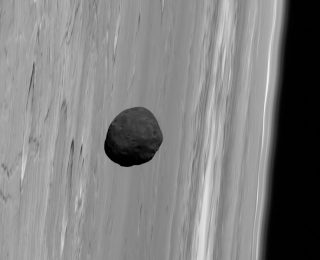
What are Mars’ moons made of?

What are Mars’ moons made of?

by Kerrin Hensley | Jul 28, 2017 | Daily Paper Summaries

The tiny Martian moons Phobos and Deimos were initially thought to be captured asteroids. Now, it looks like they might be remnants of a collision 4.3 billion years ago. Can simulations help us figure out what they’re made of?
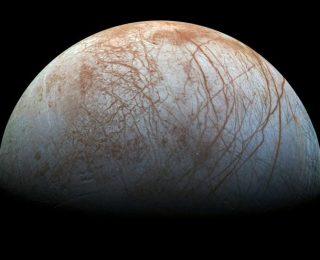
Could we detect Europa-quakes?

Could we detect Europa-quakes?

by Kerrin Hensley | Jun 19, 2017 | Daily Paper Summaries

How much tidal stress does Jupiter put on Europa? Enough to break the ice. Panning et al. estimate the magnitude of the ambient seismic noise on Europa due to tidal cracking events and turbulence in its subsurface ocean.
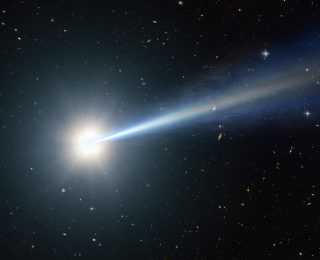
Blown away by Black Holes: Losing Planetary Atmospheres to Quasar Radiation

Blown away by Black Holes: Losing Planetary Atmospheres to Quasar Radiation

by Jamila Pegues | May 30, 2017 | Daily Paper Summaries

When it comes to habitability for Earth-like life, we’ve got more than just liquid water to worry about. Today’s astrobite looks at how planets could lose portions of their atmospheres to quasar radiation.
Meet the Keynote Speakers: Konstantin Batygin

Meet the Keynote Speakers: Konstantin Batygin

by Amber Hornsby | May 10, 2017 | Career Navigation, Daily Paper Summaries, Personal Experiences

Planetary scientist Konstantin Batygin discusses the elusive Planet Nine and how he fell into astrophysics whilst waiting for his rock band to become the next Metallica.
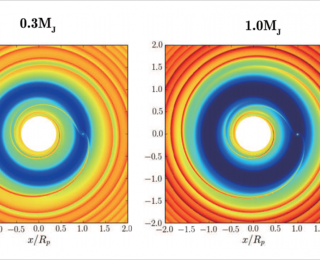
Bridging the Gap: A Stellar Way to Identify Planets in Protoplanetary Disks

Bridging the Gap: A Stellar Way to Identify Planets in Protoplanetary Disks

by Jamila Pegues | Mar 6, 2017 | Daily Paper Summaries

Characterizing planets through direct imaging is no easy task! But today’s authors offer a work-around formula, which estimates the crucial parameter of planetary mass from protoplanetary disk observations. In this astrobite, we discuss ‘The Theory’ and ‘The Practice’ of their cool equation.
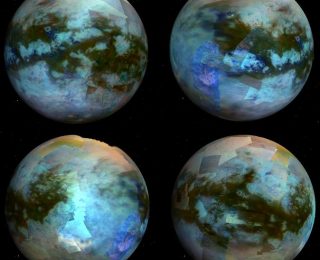
Peeking Through the Haze: A Look at Titan’s Bright Surface Features

Peeking Through the Haze: A Look at Titan’s Bright Surface Features

by Kerrin Hensley | Mar 1, 2017 | Daily Paper Summaries

Bright surface features ring Titan’s north polar lakes and trace out dry lake beds. Could these same features in the equatorial desert regions indicate that what is now desert was once covered in liquid?

« Older Entries
Next Entries »

Loading

Follow our socials

  • Bluesky
  • Facebook
  • Instagram
  • RSS Feed

More Posts About

AAS AGN astronomy astrophysics binary stars black holes cosmology dark matter dwarf galaxies exoplanets galaxies galaxy evolution gravitational waves habitability JWST Kepler Milky Way observations planetary science planet formation protoplanetary disks radio astronomy simulations solar system spectroscopy star formation stars stellar evolution supernovae theory

Posts by Category

  • Accessibility
  • Applications
  • Beyond
  • Book Reviews
  • Career Navigation
  • Classics
  • Climate Change
  • Course Assignments
  • Crossposts
  • Current Events
  • Daily Paper Summaries
  • Game Reviews
  • Guides
  • Historical Astronomy
  • Instrumentation
  • Interviews
  • Outreach
  • Personal Experiences
  • PRJ
  • Quick Notes
  • Satellites
  • Teaching
  • Undergraduate Research

More Astronomy

  • AAS
  • AAS Nova
  • astro-ph
  • AstroBetter
  • APOD

Read Astrobites in Other Languages

  • Astrobitos (Spanish)
  • Astropontos (Portuguese)
  • staryab (Farsi)

Listen to Astrobites

  • astro[sound]bites

Discover More Incredible Science

  • ScienceBites Network
  • RSS

© 2026 Astrobites | All Rights Reserved | Supported by AAS | Designed by Elegant Themes | Powered by WordPress