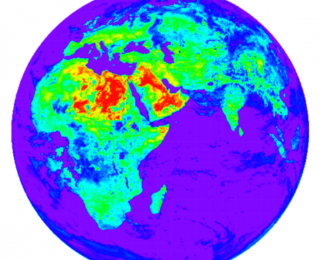
An EPIC view of the Earth as an exoplanet
In the search for habitable exoplanets, the authors of today’s paper turn their gaze to our own planet, and what we can learn from NASA’s DSCOVR:EPIC observations of Earth.

In the search for habitable exoplanets, the authors of today’s paper turn their gaze to our own planet, and what we can learn from NASA’s DSCOVR:EPIC observations of Earth.
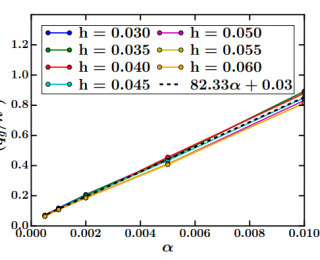
While a planet is forming, its passage through the protoplanetary disk can prevent pebbles from migrating inwards and accreting onto the planet.

How can size ordering of multiplanet systems be used to quantify the information content that these systems may retain about their formation history? Think information entropy.
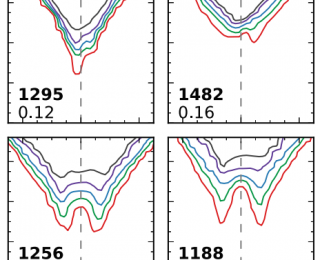
Microlensing could hold the key to studying planet formation in incredibly crowded regions of the galaxy, and today’s paper shows us how.
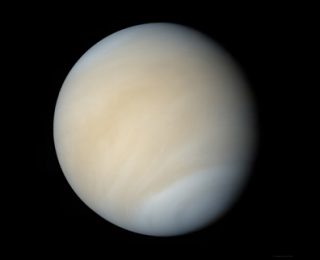
Slowly-rotating Venus has some seriously speedy clouds. Using near-infrared images from Japan’s first Venus orbiter, Horinouchi and collaborators study the atmospheric dynamics of our strange sister planet.
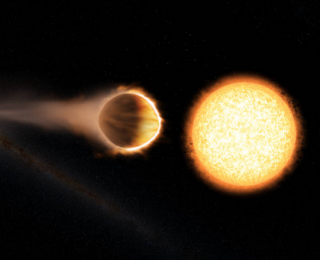
If you thought the weather on Earth was wild, think again: today we’re discussing the climate of WASP-121b.