by Caroline Morley | May 9, 2013 | Daily Paper Summaries
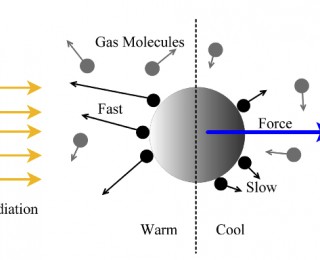
Mercury’s high density has been a longstanding puzzle in planetary science. Its density means that it must have a significantly higher iron abundance than Venus, Earth, Mars, or the asteroids, probably in the form of a large iron core. NASA’s MESSENGER mission has challenged many of the hypothesized ways to create an iron-rich Mercury; a new hypothesis is required.
by Joseph O'Rourke | Apr 30, 2013 | Daily Paper Summaries
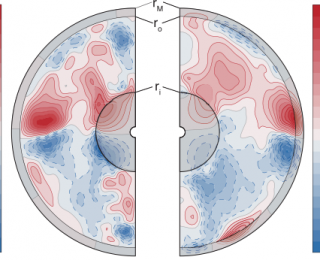
The existence of a conducting layer near the core/mantle boundary has profound implications for the operation of a dynamo in rocky exoplanets and for our ability to detect exoplanetary magnetic fields.
by Nick Ballering | Apr 23, 2013 | Daily Paper Summaries
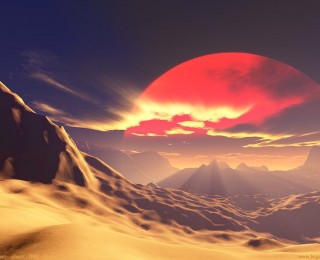
Detailed atmospheric models reveal that planets can be habitable much closer to their host star than previously thought, provided they have desert-like climates. This expanded definition of the habitable zone increases the number of planets that could support life by a factor of 2-3.
by Ben Montet | Mar 8, 2013 | Daily Paper Summaries
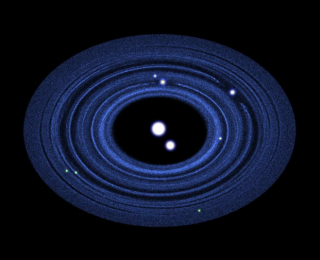
The number of known moons of Pluto has now reached five. What are they like, and how did they get there? Kenyon and Bromley use numerical simulations to answer these questions and determine what else New Horizons may find in 2015.
by Jessica Donaldson | Feb 17, 2013 | Daily Paper Summaries
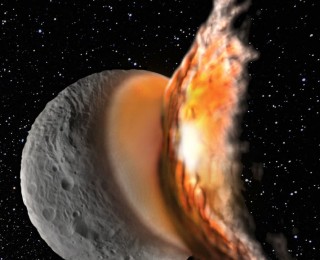
The asteroid Vesta has been scared by two giant impacts, dredging up material from deep below its surface. New simulations of the impacts allow us to trace where the material should end up and creates a conflict between theory and observation.
by Shannon Hall | Feb 10, 2013 | Daily Paper Summaries
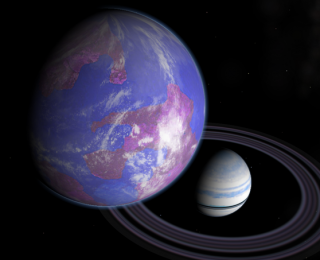
Some exoplanets seem to have walked directly out of the best science fiction movies. Taking these planets into example, the question of habitability seems like a joke. But what if we stopped looking at these extreme worlds and turned our eyes to their moons instead? Surely their moons are less extreme. And given that our own Jupiter hosts 67 moons, surely they’re more abundant. Can such extreme planets host habitable moons? The 36-page paper written by Heller and Barnes attempts to address this question.
