by Caroline Morley | May 24, 2011 | Daily Paper Summaries
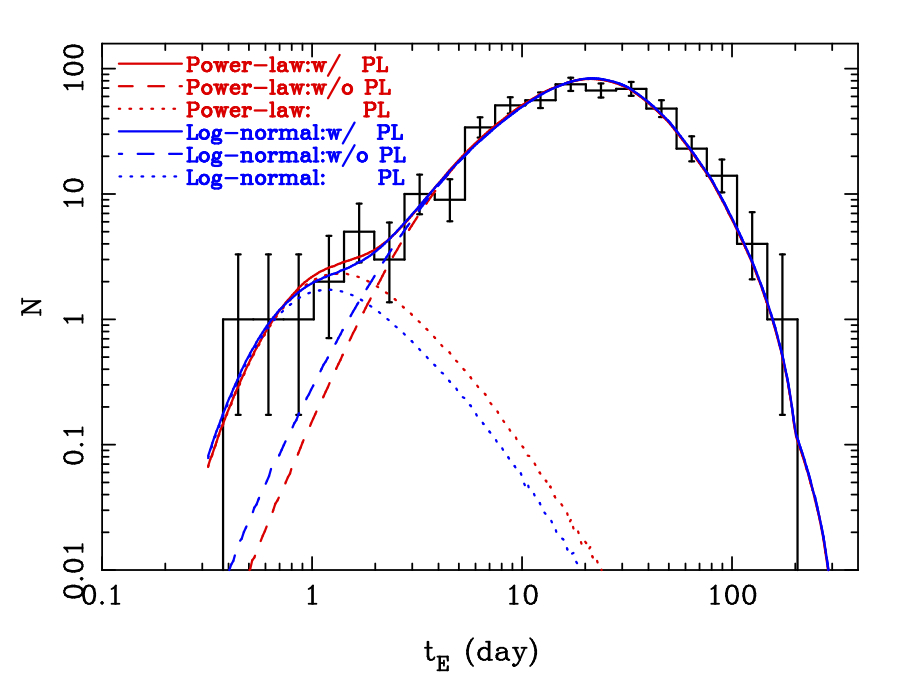
A gravitational microlensing survey finds that there is a large population of planets unbound or far from a star. In fact, the authors of this paper find that there are ~1-3 times as many Jupiter-mass planets at least 10 AU from a main sequence star as there are stars in the galaxy. These objects could either be cold, distant objects in solar systems, or, the authors suggest, they could be free-floating planets, possibly ejected from solar systems after formation.
by Courtney Dressing | May 11, 2011 | Daily Paper Summaries
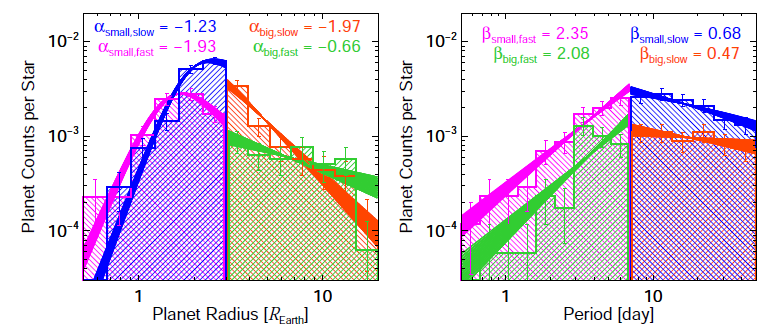
What does the Kepler data tell us about the number of planets per star and the distribution of planets in radius and orbital period? Andrew Youdin addresses that question by considering the selection effects in the Kepler sample and fitting a joint powerlaw in radius and orbital period.
by Elisabeth Newton | May 1, 2011 | Daily Paper Summaries
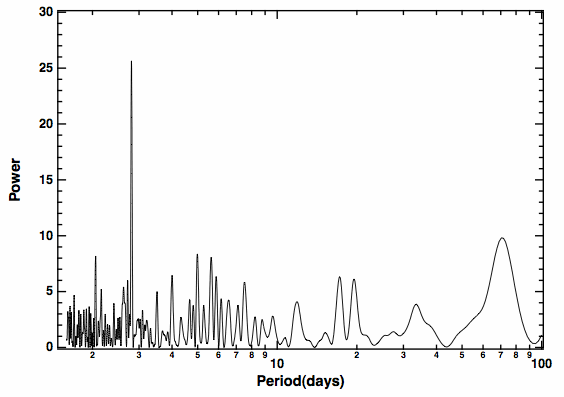
This is the story of exoplanet 55 Cnc e, which was first identified via the radial velocity method as a 14 Earth-mass planet on a 2.8 day orbit. A re-analysis in 2010 pointed towards an even shorter period orbit and a paper on the arxiv last week followed up on those predictions.
by Caroline Morley | Apr 27, 2011 | Daily Paper Summaries
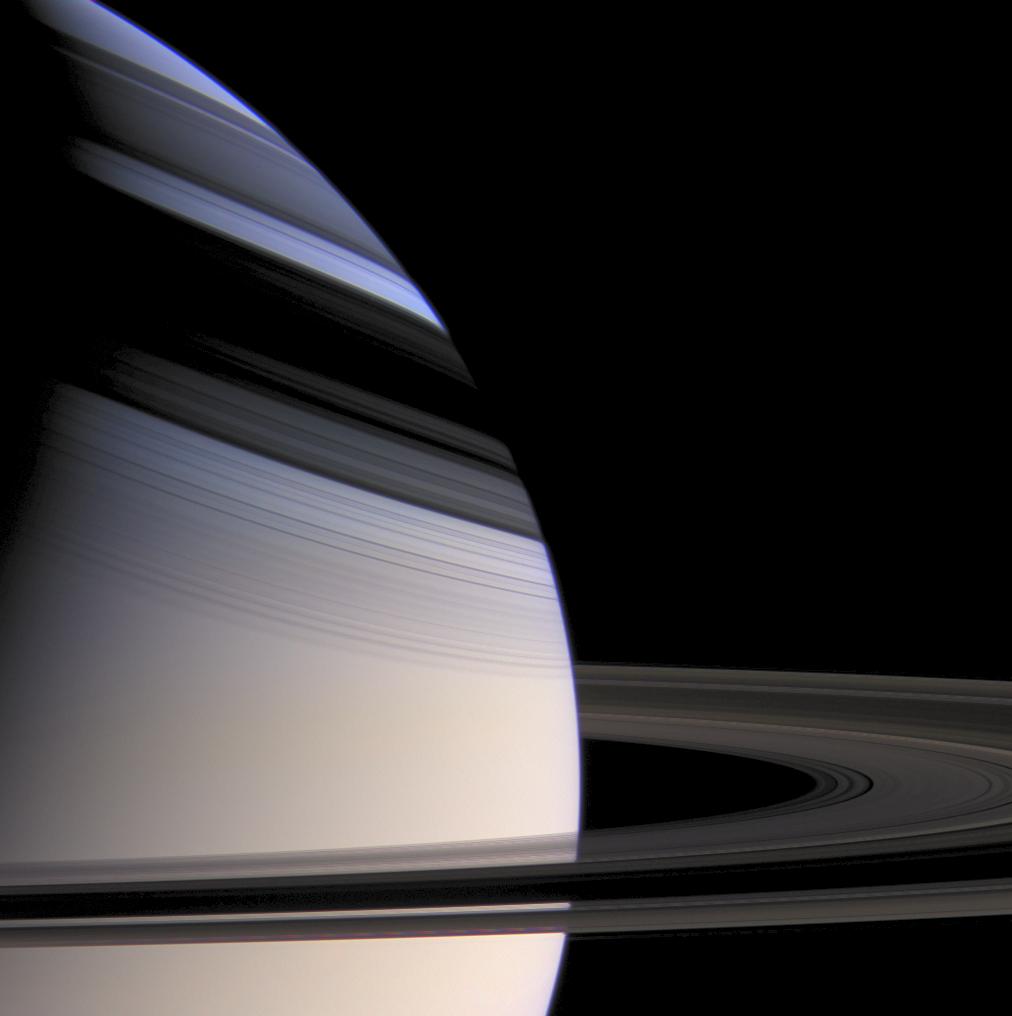
Given the possibility that extrasolar planetary rings could be discovered in the Kepler data, this paper investigates what types of ring systems could physically exist around planets with semi-major axes of 1 AU or less. Could rings exist so close to the host star? How might these ring systems look like ones in our own solar system? How would the rings be different? What could a ring detection tell us about the exoplanet?
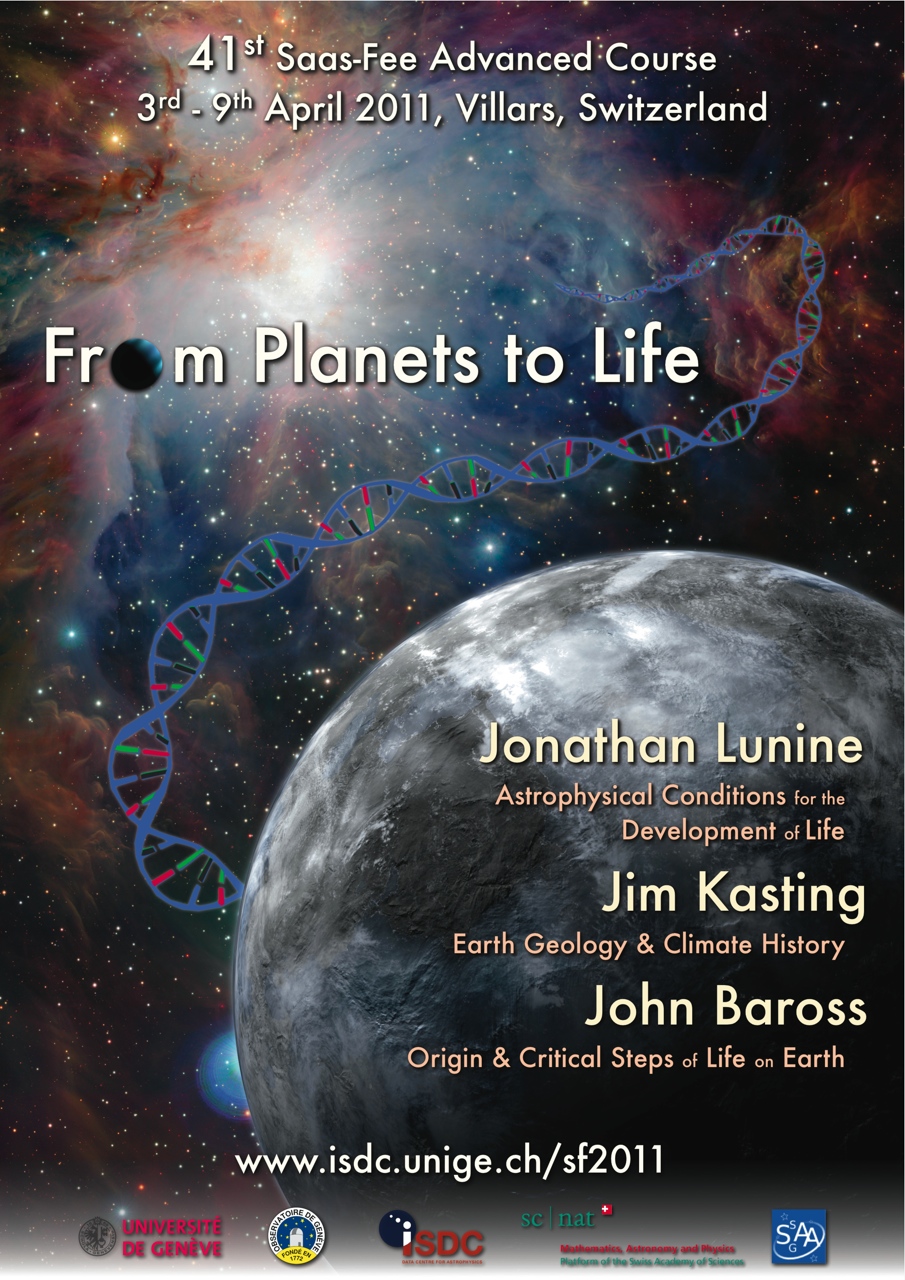
by Courtney Dressing | Apr 23, 2011 | Personal Experiences
Sukrit and I just got back from the Saas-Fee astrobiology course. We learned about deep-sea life, the evolution of Earth’s atmosphere, the search for life on Titan, and more.

by Courtney Dressing | Apr 13, 2011 | Daily Paper Summaries
Is there a third companion in the Sirius system? Thalmann et al. conduct direct imaging observations to find out.
