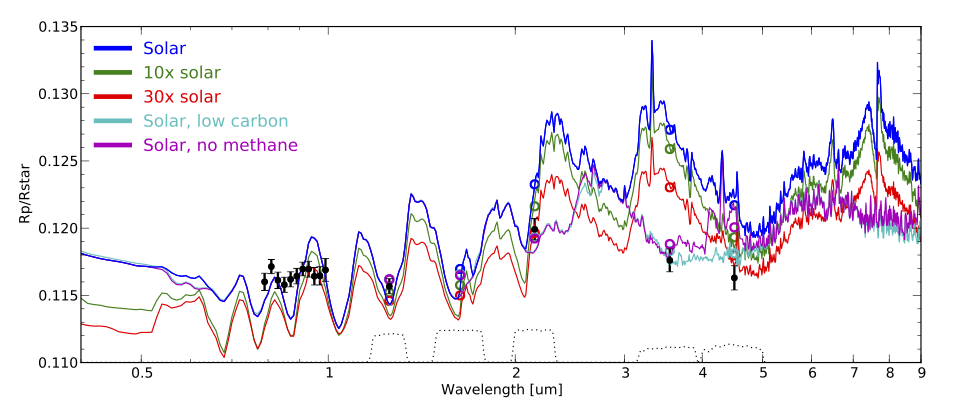
Characterizing the Puzzling Atmosphere of Super-Earth GJ 1214b
In this paper, the authors attempt to characterize the composition of the atmosphere of the super-Earth GJ 1214b.

In this paper, the authors attempt to characterize the composition of the atmosphere of the super-Earth GJ 1214b.
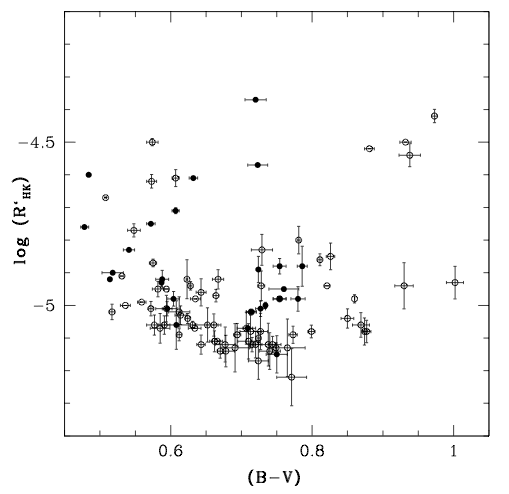
Do close-in planets cause their host stars to become more magnetically active? Canto Martins et al. compare stars with and without planets to address this question.
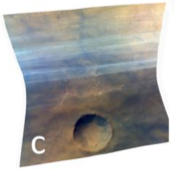
Meteorology of other planets in our solar system provides critical laboratories for testing our climate models, studying new weather mechanisms, and developing climate theories for other worlds. This particular paper discusses a method for identifying carbon dioxide clouds on Mars using infrared spectroscopy.
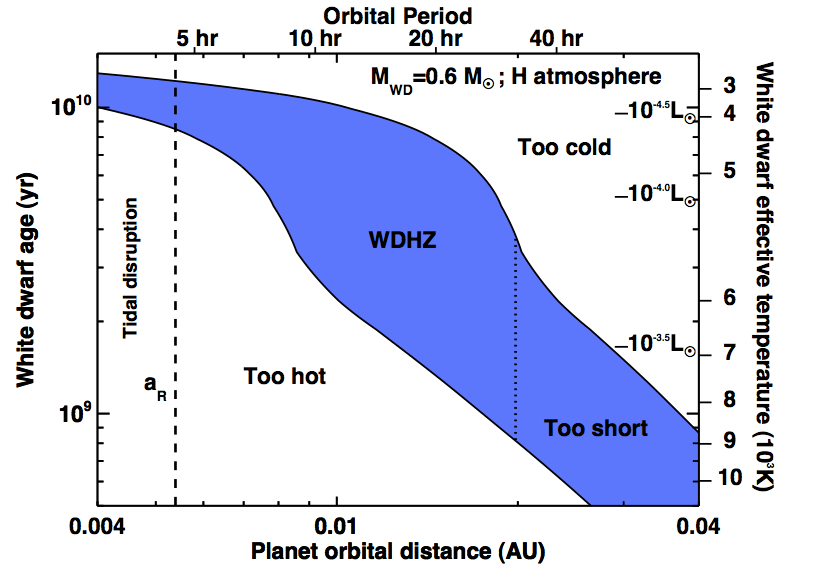
The Kepler mission is doing a fantastic job detecting planets around main sequence stars, but what about white dwarfs? Do they have planets? If they do, Agol 2011 suggests that those planets could be detected in ground-based transit surveys.
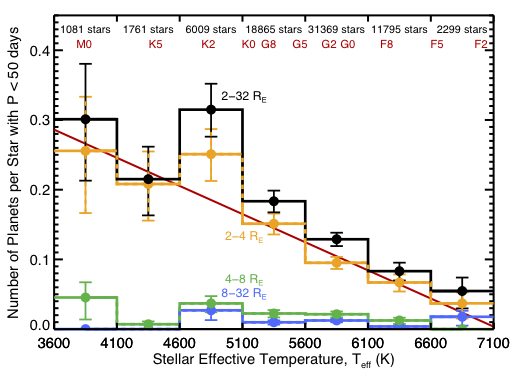
The Kepler mission is hot right now, having just released it’s largest data set ever last month. One of the main aims of Kepler is to get statistics on exoplanets. How rare are they? Which stars have the most planets? What sized planets are most common? How far away are they from their host star? In the latest paper to be published by the Kepler Science Team, Howard et al. attempt to begin to answer some of these questions by analyzing the trends in the published data.
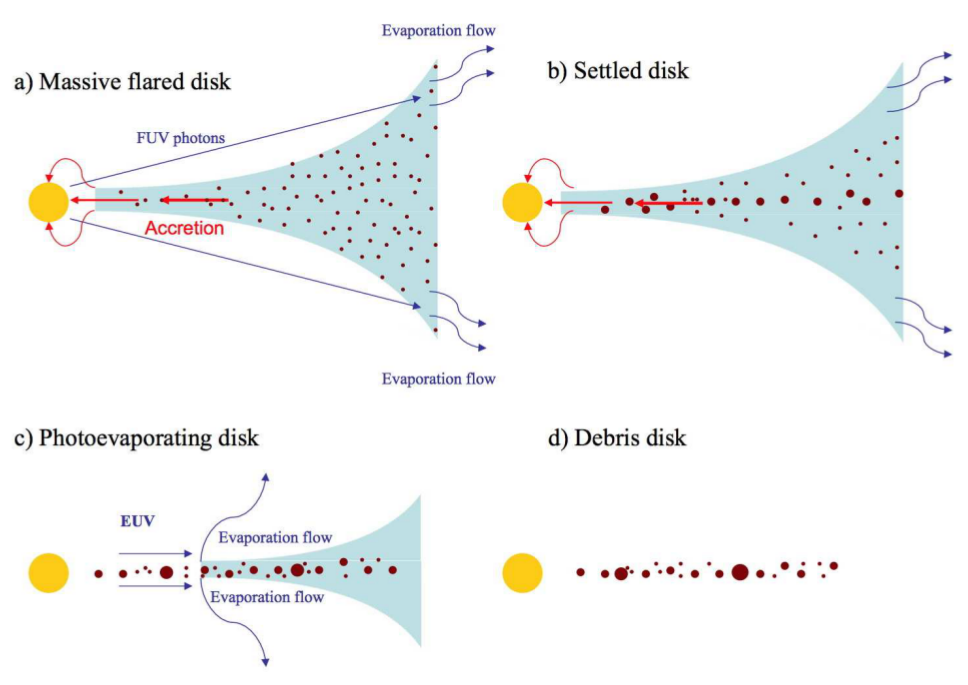
In a new review article, Jonathan Williams and Lucas Cieza at the Institute for Astronomy (IfA) describe the life-story of protoplanetary disks from formation from collapsing molecular clouds to the end-state of a planetary system. Infrared telescopes like Spitzer and sub-millimeter radio telescopes like the the James Clerk Maxwell Telescope, the Submillimeter Array (SMA), and the Combined Array for Research in Millimeter Astronomy (CARMA) have greatly revolutionized the study of protoplanetary disks because they can probe the emission at the longer wavelengths where the disk emission is strongest.