by Tim Lichtenberg | May 29, 2015 | Daily Paper Summaries
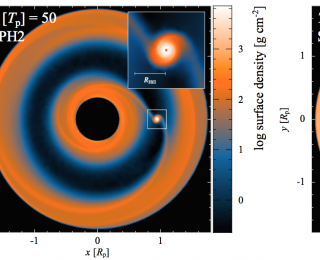
Often science is a competition. Being first is sometimes important to get the well deserved credit for your work. Circumplanetary disks are currently a topic, in which you can still be first, since none has been detected so far. But is the current generation of telescopes already good enough to do that?
by Ben Cook | May 13, 2015 | Daily Paper Summaries
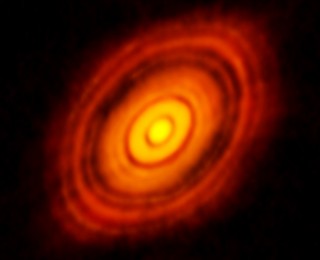
The authors of today’s paper show that the locations of the protoplanetary gaps in HL Tau are to be expected from the condensation points of common ices in the disk.

by Michael Küffmeier | Apr 3, 2015 | Classics, Daily Paper Summaries
Planets seem to occur all over the place in the universe. However, it is still unknown how they form. The growth of objects larger than meter size is difficult because objects of this size quickly fall into the central star. This Astrobite gives a small overview of the meter-size barrier as found by Stuart J. Weidenschilling in 1977.
by Meredith Rawls | Mar 20, 2015 | Daily Paper Summaries
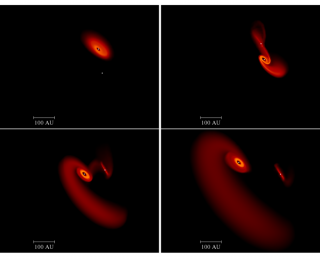
You can’t model RW Aurigae as a single star with a disk of material around it, because there is a second star. And you can’t model it as a regular old binary system either, because there are interactions between the stars and the asymmetric disk. The authors of today’s paper create a comprehensive hydrodynamic model that considers many different observations of RW Aurigae.
by Tim Lichtenberg | Mar 6, 2015 | Daily Paper Summaries
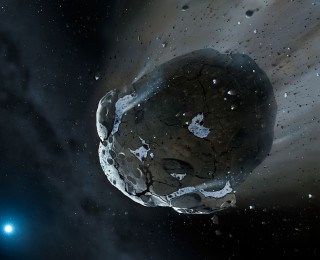
Earth’s oceans may have originated mainly from accreted impactors. But do planets in other systems experience the same water delivery mechanism? Or do they even get more water than our world? Find out why you would want to think about this and what the consequences might be.
by Jaime Green | Mar 4, 2015 | Daily Paper Summaries
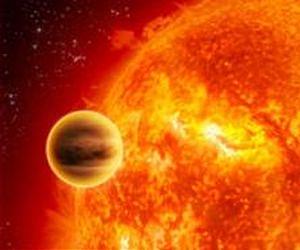
Hot Jupiters are weird and lonely. Is gravitational perturbation to blame?
