by Ian Czekala | Aug 26, 2011 | Daily Paper Summaries
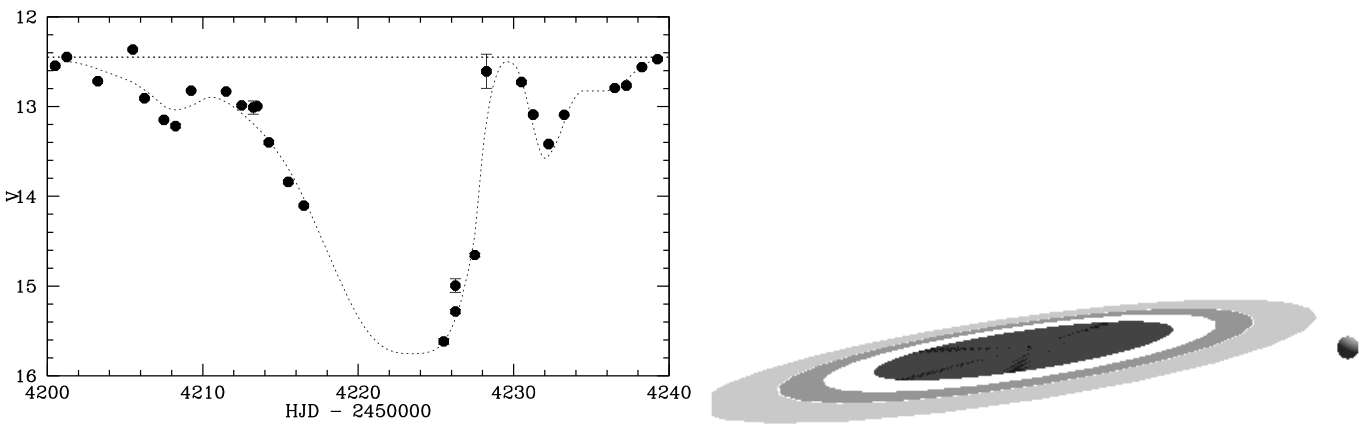
We know other stars have planets. We know that certain stars have circumstellar disks. We know that before there are planets, there must be a protoplanetary disk; we also know that these two states must be connected through a evolutionary path which includes planet formation.
What if–if we were just so lucky–we found a protoplanetary system that had a disk, that was aligned so perfectly, and that was bright enough, and ….

by Katherine Rosenfeld | Jun 24, 2011 | Daily Paper Summaries
Some astrophysicists must work in space – or as close as they can get – to accomplish their research. This paper discusses an experiment studying how dust can stick together and form planetesimals.
by Ian Czekala | Mar 11, 2011 | Daily Paper Summaries
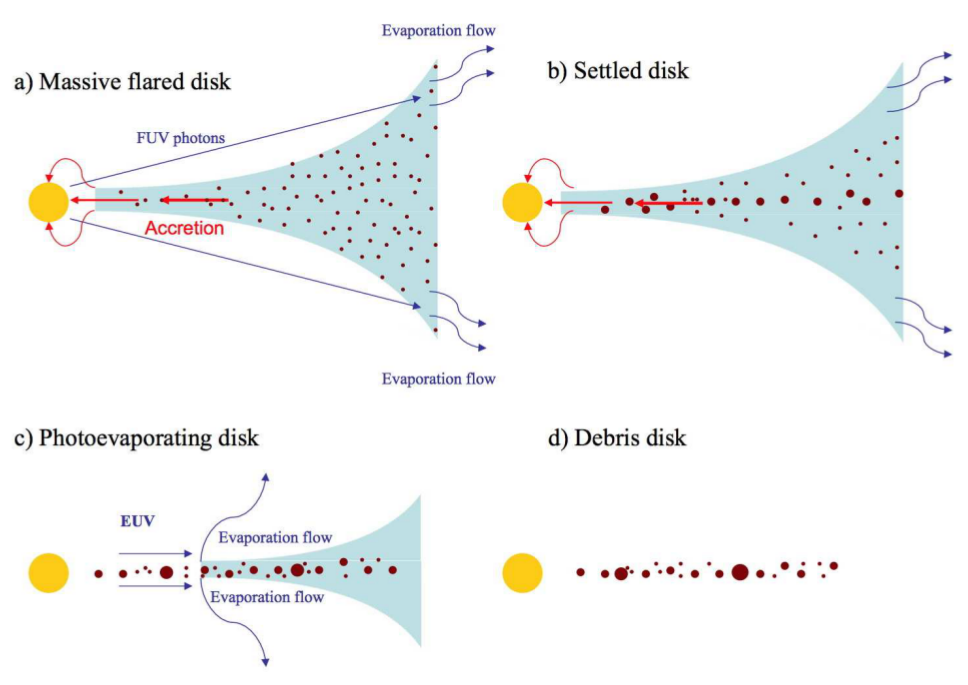
In a new review article, Jonathan Williams and Lucas Cieza at the Institute for Astronomy (IfA) describe the life-story of protoplanetary disks from formation from collapsing molecular clouds to the end-state of a planetary system. Infrared telescopes like Spitzer and sub-millimeter radio telescopes like the the James Clerk Maxwell Telescope, the Submillimeter Array (SMA), and the Combined Array for Research in Millimeter Astronomy (CARMA) have greatly revolutionized the study of protoplanetary disks because they can probe the emission at the longer wavelengths where the disk emission is strongest.
by jsureshcfa | Feb 28, 2011 | Daily Paper Summaries
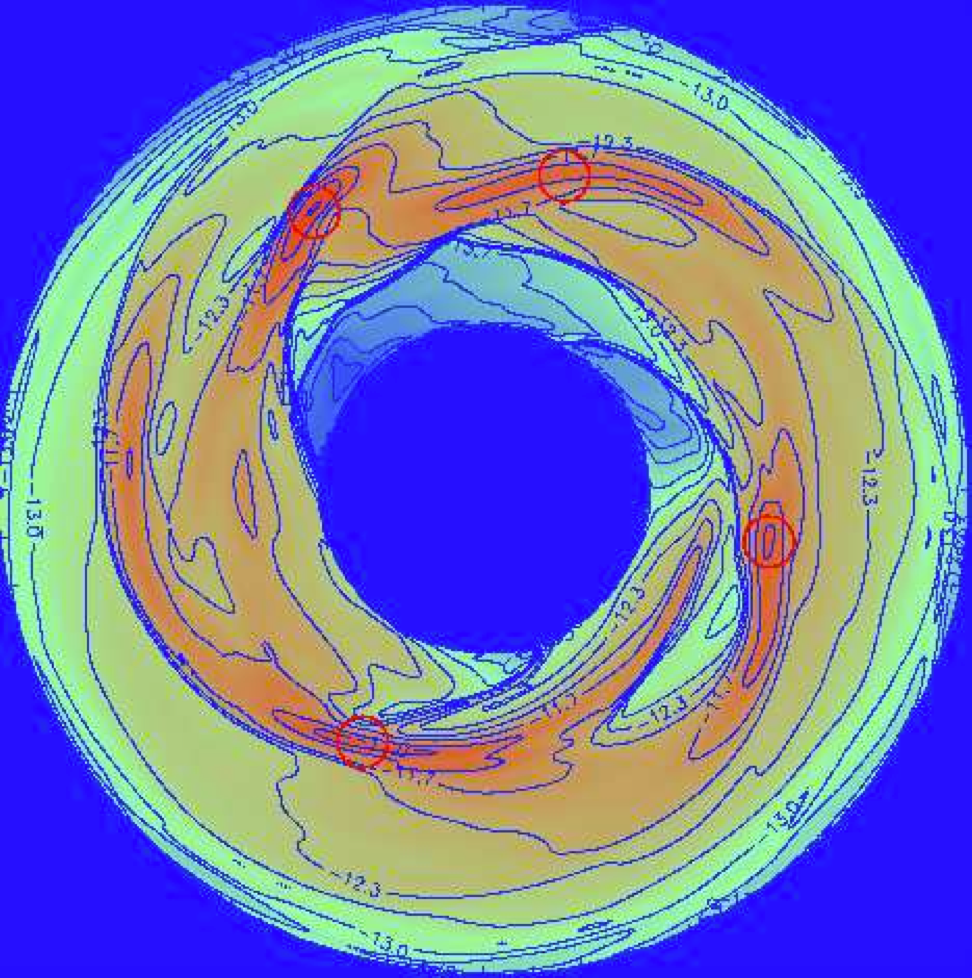
Gravity can induce global instabilities in disks around stars, which then collapse to form planets at different radii.
