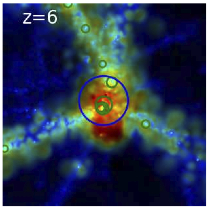
Cold Flows and the First Quasars
Using a new simulation called MassiveBlack, the authors of today’s astrobite manage to grow black holes massive enough (and quickly enough) to be consistent with the recently discovered z ~ 7 quasar.

Using a new simulation called MassiveBlack, the authors of today’s astrobite manage to grow black holes massive enough (and quickly enough) to be consistent with the recently discovered z ~ 7 quasar.
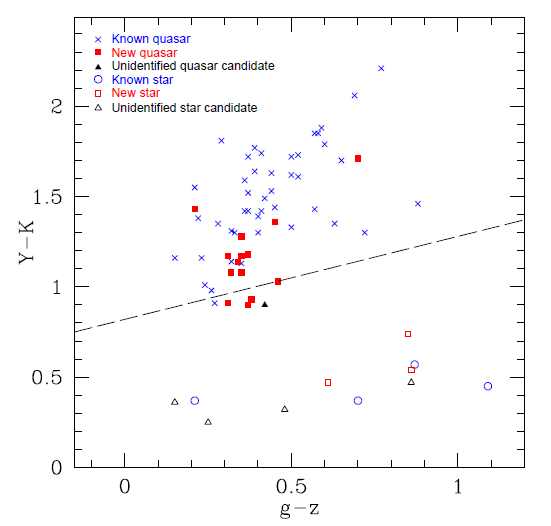
What happens when redshifted quasars masquerade as stars? How do astronomers isolate them from the stellar population?
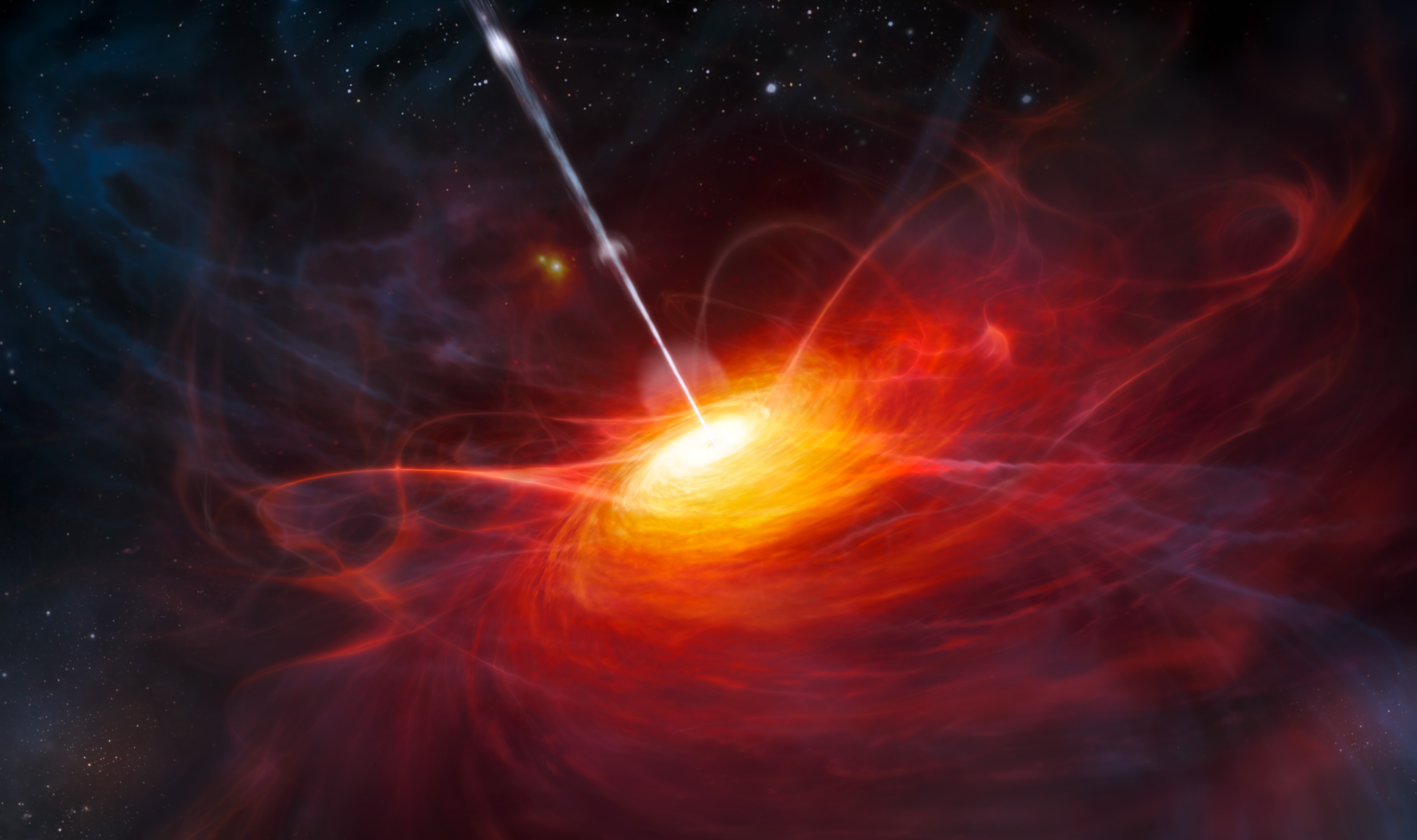
This new finding challenges existing theories of structure formation in the early universe and provides insight into the nature of intergalactic space early in the epoch of galaxy formation.
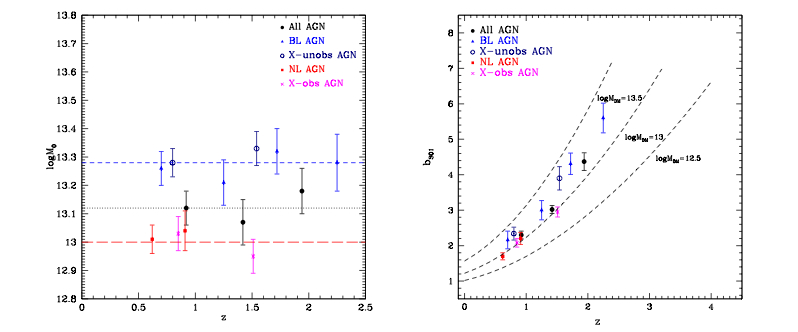
Using measurements of the projected correlation function, Allevato et al. study the evolution of X-ray selected, active galactic nuclei (AGN) in order to help understand how these massive, central black holes are triggered and where they fit in a larger cosmological framework.
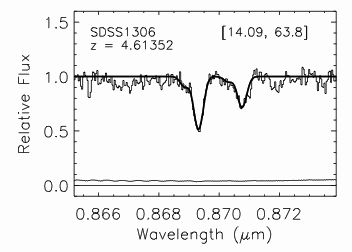
As the light from these distant objects propagates towards us, it encounters metals in the intervening IGM that superimpose absorption lines on the quasar’s spectra. By looking for metal absorption lines in the spectra of high redshifts quasars, we can learn about the metal content of the IGM. This paper by Simcoe et al. considers the spectra of 7 quasars with redshifts greater than 5.5. The moderate-resolution, near-infrared spectra were obtained over the past year with the FIRE spectrograph.
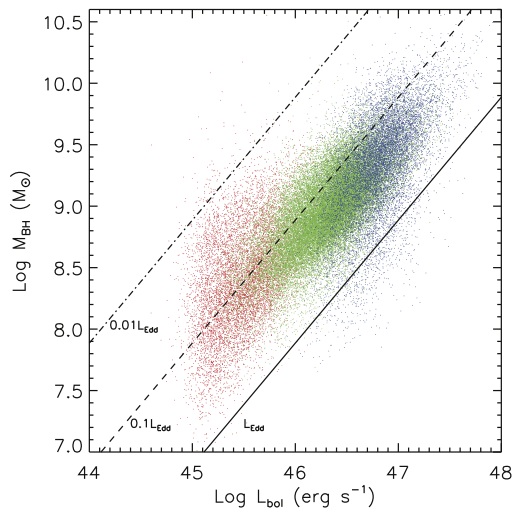
In this paper, the author examines what happens to the quasar mass-luminosity relationship if the method used to calculate the black hole masses is biased, as well the physical implications of different corrections that have been suggested.