by Zephyr Penoyre | Oct 25, 2016 | Daily Paper Summaries
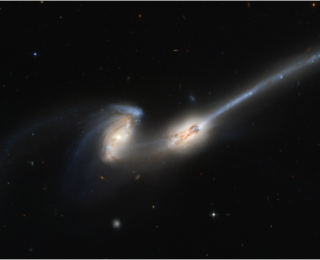
“…and other lesson’s I learned when I was a spiral galaxy” — Our ideas of what happens to galaxies when they crash into each other comes mostly from simulations. But what if those results aren’t as trustworthy as we think? By watching a galaxy merger in the highest detail we can, we see that collisions may not be as destructive as we thought, and you just might survive a head-long crash into another galaxy.
by Anson Lam | Sep 27, 2016 | Daily Paper Summaries
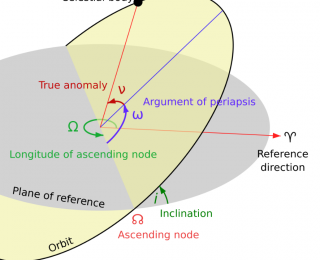
Spinning stars can potentially double the number of seasons that a planet experiences due to surface temperature variations on the stellar surface.
by Guest | Sep 13, 2016 | Daily Paper Summaries
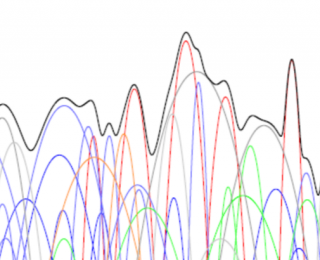
In today’s guest post, Caitlin Doughty discusses how carbon lines are misidentified and their impact on cosmology.
by Christopher Lovell | Aug 18, 2016 | Daily Paper Summaries
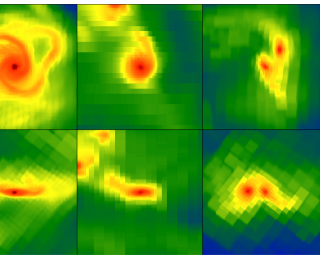
Simulations of the first groups of stars display a variety of shapes and sizes, and may provide clues as to where their ancestors are hiding today
by Anson Lam | Aug 17, 2016 | Daily Paper Summaries
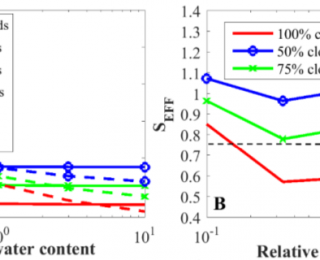
Early in its history, cloudy weather could have helped Mars retain enough heat for liquid water to exist on its surface.
by Ingrid Pelisoli | Jun 29, 2016 | Daily Paper Summaries
White dwarf stars are the final evolutionary state of most stars. They are everywhere in the Galaxy and are relatively easy to model. So can we learn about our Galaxy solely by studying them? The authors of today’s paper show us a way.
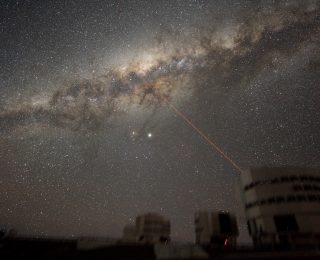
Image credits: ESO/Y. Beletsky.
