by Michael Hammer | Aug 12, 2016 | Daily Paper Summaries
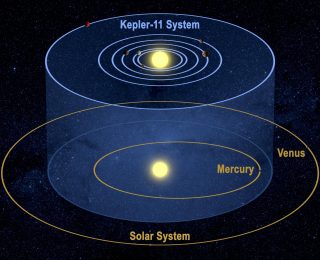
Roughly half of all planetary systems have planets much closer to their stars than Mercury is to our Sun. Can a system’s magnetic field during the stage of planet formation explain why half of all systems (including our own) do not have these planets when the other half do?
by Tim Lichtenberg | Aug 9, 2016 | Daily Paper Summaries
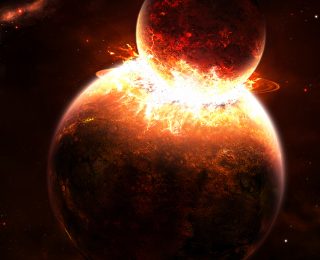
Earlier than one billion years ago, Earth’s magnetic field had to be driven differently than today. But how? And what can we learn from this about magnetic fields on exoplanets?
by Ingrid Pelisoli | May 12, 2016 | Daily Paper Summaries
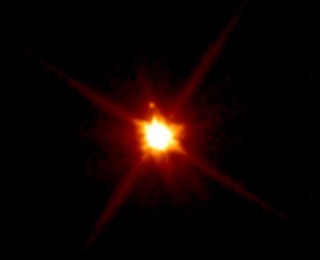
There’s so much to see in the Universe that we can forget there are still things to discover in our own neighborhood. The authors of today’s paper decided to search the Solar System a bit further, and made a very interesting discovery around the dwarf planet Makemake.
by Michael Zevin | Jan 29, 2016 | Daily Paper Summaries
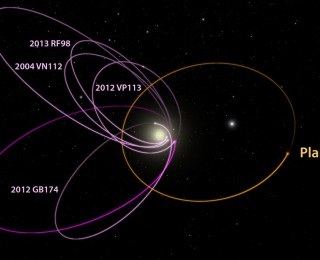
Get ready to come up with a new mnemonic for the planets. The orbits of distant objects suggest that there may be something lurking in the outer Solar System as big as Neptune!
by Gudmundur Stefansson | Dec 22, 2015 | Current Events, Daily Paper Summaries
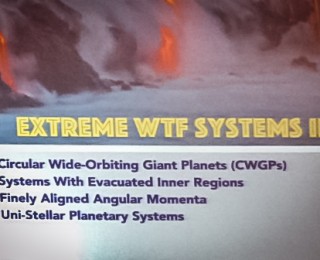
The third Extreme Solar System conference was held between Nov 29 to Dec 4th, in Kona, Hawaii, on the 20th anniversary of the first exoplanet detection around a main sequence star. This astrobite gives a brief overview of the conference.
by Michael Zevin | Dec 15, 2015 | Daily Paper Summaries
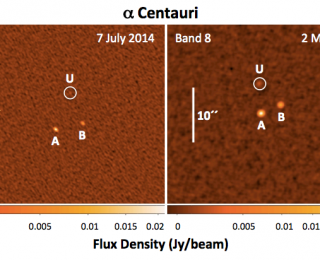
ALMA may have serendipitously discovered two new members of our Solar System. Read on to discover how, and what these previously unidentified objects may be.
