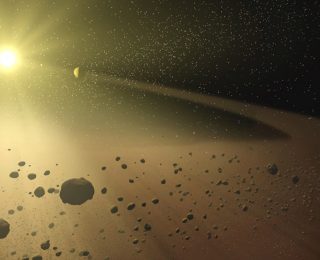
by Kerrin Hensley | Apr 10, 2017 | Daily Paper Summaries
Interstellar space should be littered with debris ejected during the formation of planetary systems—but how much? Engelhardt et al. use solar system surveys and simulations to place an upper limit on the number density of asteroids and comets roaming the Milky Way without a parent star.
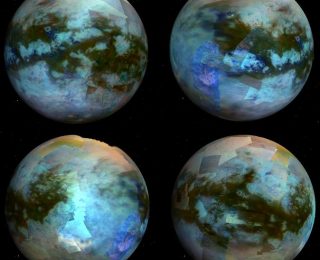
by Kerrin Hensley | Mar 1, 2017 | Daily Paper Summaries
Bright surface features ring Titan’s north polar lakes and trace out dry lake beds. Could these same features in the equatorial desert regions indicate that what is now desert was once covered in liquid?
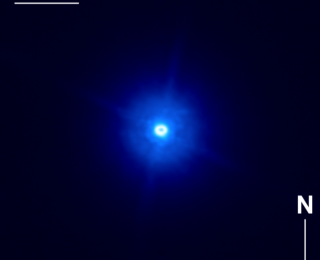
by Amber Hornsby | Jan 9, 2017 | Daily Paper Summaries
Kepler has uncovered thousands of exoplanets, but have failed to discover many Hot-Neptunes. Today we’ll be discussing K2-105 b and its potential in unlocking the secrets of our own Solar system.
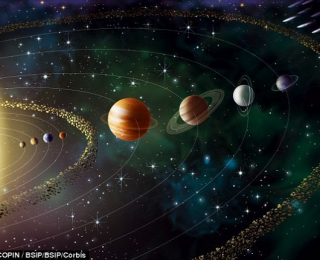
by Tim Lichtenberg | Nov 1, 2016 | Daily Paper Summaries
The puzzling architecture of the Solar system has long been a headache for planetary dynamicists. An alternative model of the gas giants’ movements may shed new light on the issue.
by Michael Küffmeier | Oct 31, 2016 | Daily Paper Summaries
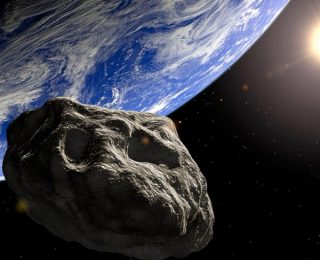
It is commonly believed that Earth and meteorites reveal substantial differences. Today’s authors challenge this view based on their laboratory experiments.
by Michael Hammer | Sep 19, 2016 | Daily Paper Summaries
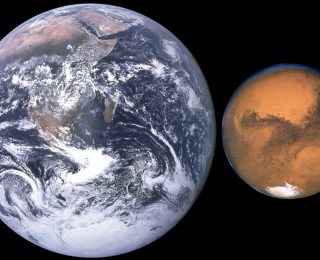
J’onn J’onzz needs astronomers’ help figuring out why his home planet of Mars is smaller (and hence, less habitable) than the Earth. He already asked the rest of the Justice League, but they could not solve the problem. Can Drążkowska et al. save the day?
