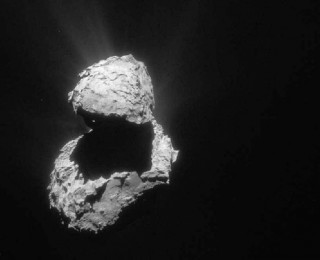
by Michael Küffmeier | Dec 2, 2015 | Daily Paper Summaries, Guides
More than a year ago, scientists managed to land on a comet for the very first time in human history. Read on to get a compact overview of some of the most important results of the mission obtained so far.
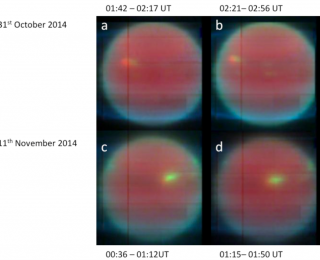
by Natasha Batalha | Oct 9, 2015 | Daily Paper Summaries
A bright spot on Uranus triggered an international push to figure out what exactly was going on. Here is a first look at the bizarre weather patters in the atmosphere of our distance neighbor.
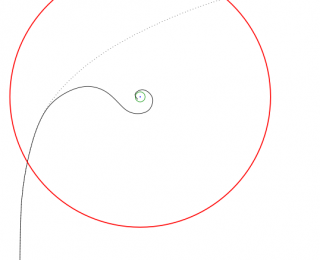
by Michael Küffmeier | Sep 9, 2015 | Daily Paper Summaries
A model that needs fewest parameters to explain a scenario is favourable. The fact that mm-size dust grains (chondrules) are present in the entire solar system brings rise to the question, whether all bigger solid objects are a collection of chondrules.
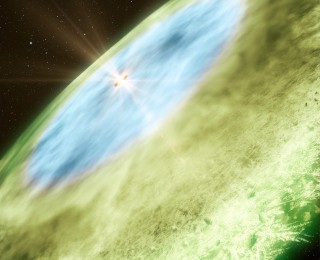
by Tim Lichtenberg | Jul 24, 2015 | Daily Paper Summaries
How and where did the first organic molecules emerge? Sophisticated chemistry models for the synthesis of amino acids within planetesimals can help us to decipher these mysteries.
by Becky Smethurst | Jul 16, 2015 | Daily Paper Summaries
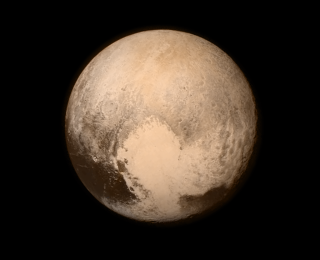
Pluto: the last and final of the ‘original’ 9 planets of the Solar System to be visited by a probe. NASA’s New Horizons arrived at this tiny world at the edge of the Solar System earlier this week bringing into sharp focus for the first time. Science was a plentiful from every new image that was released, so here’s a quick recap for you, just in case you blinked and missed it…
by David Wilson | Jun 9, 2015 | Daily Paper Summaries
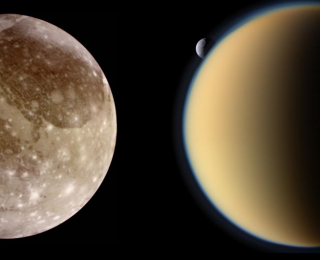
Among the many ideas proposed to explain the formation of our Solar system, one of the leading theories is the “Grand Tack”. This scenario suggests that, early in their formation, Jupiter and Saturn undertook a sweeping voyage, migrating from the outer Solar System to within the orbit of Mars. The two huge planets then entered an orbital resonance with each other, before their cosmic dance took them back out to their current positions. The model neatly explains, amongst other things, the current locations of Mars, the Asteroid Belt and the outer planets—which are hard to recreate in models assuming a more static Solar System.
