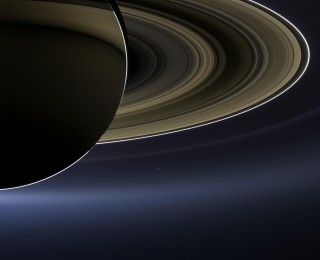
Optimizing the search for pale blue dots
How can we find other pale blue dots? Today’s paper studies what could be the most time-effective way to search for Earth-like exoplanets, just by looking at their colors.

How can we find other pale blue dots? Today’s paper studies what could be the most time-effective way to search for Earth-like exoplanets, just by looking at their colors.
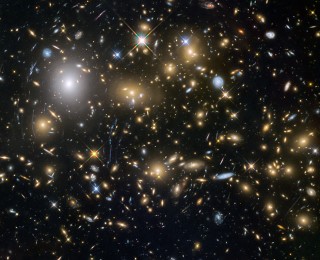
Our current understanding of the Universe suggests that its largest structures, such as clusters and groups of galaxies, would have formed only within the second half of the Universe’s current age. However, today’s paper explores the proposed observational evidence that such structures may actually have began forming a lot earlier than we expected. This poses intriguing questions about the way we model the cosmos, how we interpret our observations, and whether we might need to rethink cosmology.
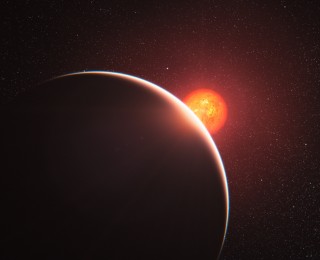
In 2014, astronomers found evidence for the existence of two super-Earths orbiting the 10 billion years-old Kapteyn’s star. However, today’s paper is casting doubt on the detection of at least one of these planets, and stellar activity is to blame.

Have we found evidence for the first generation of stars? This paper details observations made of CR7, one of the brightest observed high redshift galaxies
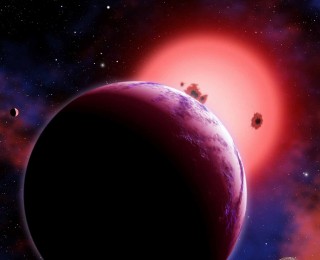
Can life on exo-worlds build its own habitable environment in extremely unfavourable conditions?
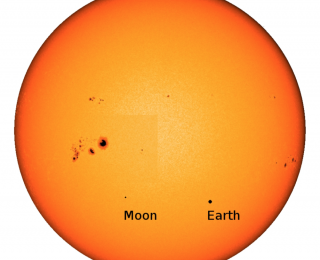
How do you observe an Earth transit, from Earth? You use some of the Solar System’s largest mirrors. The authors did. They found an anomaly.