by Meredith Rawls | Sep 29, 2015 | Daily Paper Summaries
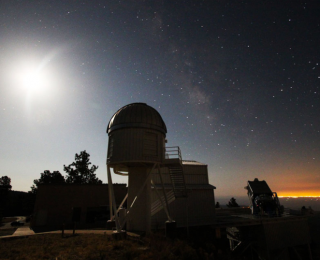
The three-year APOGEE survey was designed to target red giant stars in the Milky Way using near-infrared light, and today’s paper marks the final data release: half a million spectra of 146,000 stars. This treasure trove of data will be put to good use for years to come.
by Michael Zevin | Sep 22, 2015 | Daily Paper Summaries
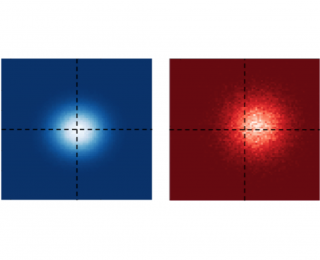
There are more moons than planets in our Solar System that harbor liquid water, and these moons may offer us the best chances of finding life off of Earth. Today’s paper takes the search for habitable moons a step further by investigating how telescopes of the near future might allow us to see and characterize these moons around exoplanets.
by Jesse Feddersen | Sep 16, 2015 | Daily Paper Summaries
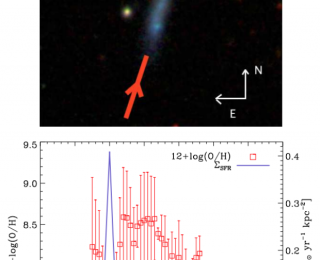
Observations of dwarf galaxies show that sites of active star formation have fewer metals. These galaxies may have been diluted by the impact of pristine gas from the cosmic web.
by Gudmundur Stefansson | Jul 13, 2015 | Current Events
Our current best radial velocities are precise to about 1m/s. How do we make the step towards achieving 10cm/s precision?
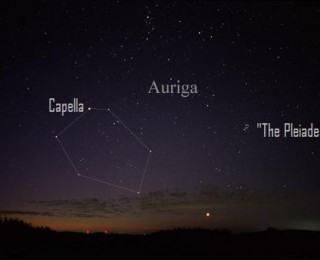
by Meredith Rawls | Jun 11, 2015 | Daily Paper Summaries
While you might expect astronomers to already have a complete understanding of bright stars easily visible to the naked eye like Capella, observations have historically failed to line up with stellar evolution theories. Today’s paper revisits Capella with a new suite of observations to finally uncover some of its secrets.
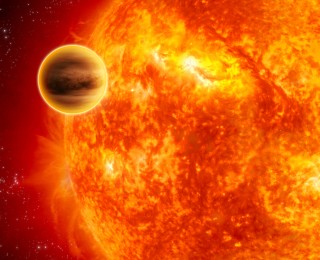
by Natasha Batalha | Apr 29, 2015 | Daily Paper Summaries
Although this planet is far from habitable, scientists have confirmed the presence of water vapor in the atmosphere of the WASP-12 system. What does this infer about its planetary atmosphere? Is this in agreement with other studies? The story is not as black and white as we might have thought.
