
How to count stars you can’t see: the stellar IMF in distant galaxies
Van Dokkum & Conroy examane the variation of the stellar initial mass function by observing the integrated light from early-type galaxies.

Van Dokkum & Conroy examane the variation of the stellar initial mass function by observing the integrated light from early-type galaxies.
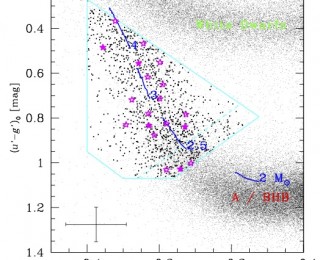
Five new hypervelocity stars have been discovered in the outer regions of the Milky Way. In this paper, the authors discuss what these stars are, how they got so far away, and what their distribution implies about the center of our galaxy.
The basis for something called the “G dwarf problem” is the comparison between observations and a simple model for chemical evolution in a galaxy. To cut to the chase, there are fewer very metal poor G dwarfs than are predicted by this basic understanding. This discrepancy has been shown to hold for the Milky Way as well as for other galaxies. It also holds for K dwarfs in the Milky Way – and now for M dwarfs as well.
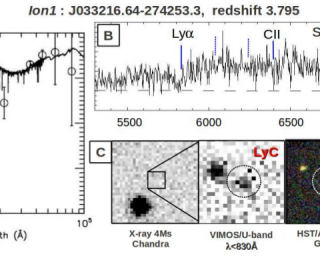
Any photon with a wavelength shorter than 912 angstroms (the Lyman limit) will ionize neutral hydrogen by raising the atom’s electron from the ground state to an unbound state at infinity. From measurements of quasar absorption spectra, we know that the reionization of the intergalactic medium from its previously neutral state (at redshifts greater than 7) to the highly ionized state we observe today was complete by redshift of ~7. However, we still do not know which sources were responsible for producing the ionizing photons.
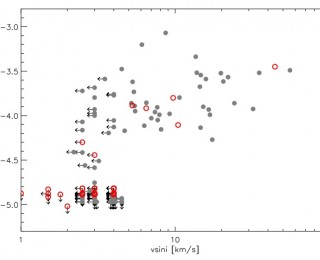
This paper delves into some of the physical properties of early M dwarfs (M0-M4.5), focusing on chromospheric/magnetic activity and rotation. The authors present a catalog of activity and rotation for 334 early M dwarfs.
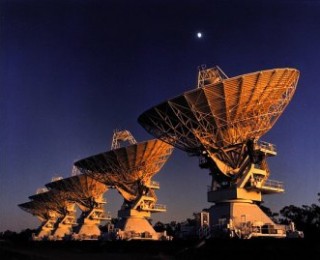
Using a rotational transition of methanol, this paper attempts to see if a fundamental constant has changed over cosmic time.