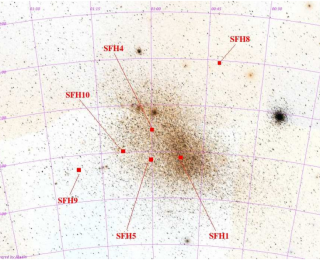
The (not so) Sordid History of the Small Magellanic Cloud
The authors of today’s paper find out just what kind of star formation history lies in the Milky Way’s next meal: The Small Magellanic Cloud. After all, they say you are what you eat.

The authors of today’s paper find out just what kind of star formation history lies in the Milky Way’s next meal: The Small Magellanic Cloud. After all, they say you are what you eat.
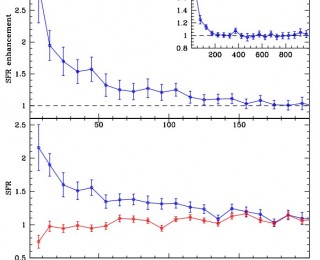
Star formation is enhanced when two galaxies interact or merge. But what is the orbital extent of enhanced star formation in interacting galaxies? At which projected separation of the two galaxies does it disappear?
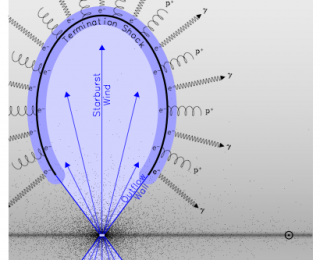
What causes the giant radio and gamma-ray bubbles inflated from our galactic center? This paper provides another good argument for star formation as the culprit.
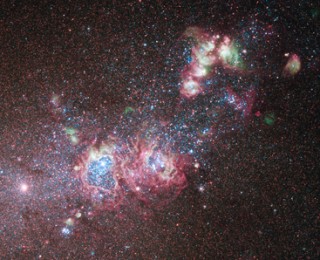
Hubble observations of a nearby galaxy show evidence for a universal initial mass function.
A team of astronomers working on the 3D-HST survey make use of the Hubble Space Telescope’s grism to observe star formation as a function of radius in a large sample of galaxies at intermediate redshift.
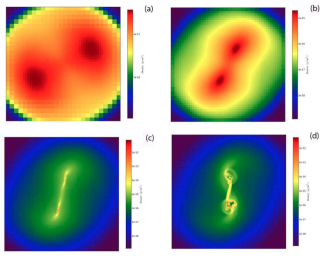
Boss & Keiser examine how magnetic fields with varying initial conditions affect star formation.