Evaporating Disks With Massive Stars
Radiation from massive stars can melt away protoplanetary disks. What can the leftover disks tell us about the environment from which they formed?

Radiation from massive stars can melt away protoplanetary disks. What can the leftover disks tell us about the environment from which they formed?
A mysterious type of matter, quark-gluon plasma, may lie at the heart of neutron stars.
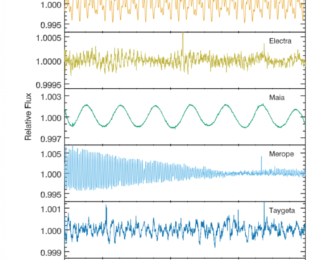
Today’s authors use a new technique to make new discoveries about the Seven Sisters.
The Milky Way’s nearest neighbor, the Andromeda galaxy, is a promising target for deep multi-wavelength observations. Come listen to Prof. Julianne Dalcanton talk about her work catching up with the neighbor at #AAS233!
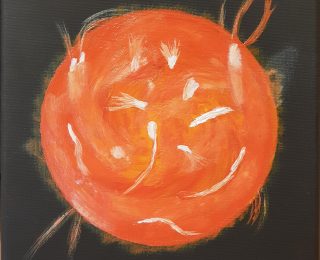
Why is our Sun so anomalously stable in brightness compared to other stars? The authors of today’s paper decided to run some simulations to find out.
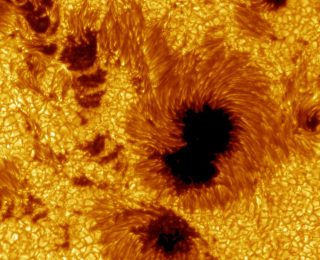
There are a lot of Sun-like stars in the universe. Are they as identical as the name suggests, or are there important differences between them?