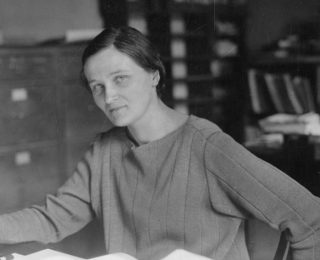
The Stuff of Stars
I attempt to summarize what some astronomers have called “undoubtedly the most brilliant Ph.D. thesis ever written in astronomy.”

I attempt to summarize what some astronomers have called “undoubtedly the most brilliant Ph.D. thesis ever written in astronomy.”
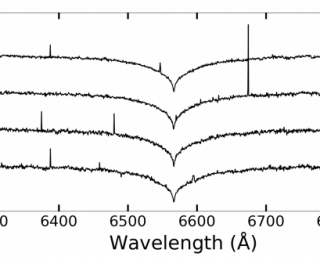
Measuring a white dwarf’s gravitational redshift can help us figure out its mass, but for one of the closest stars to us (Sirius B) the numbers didn’t match with other methods. Today’s paper investigates the discrepancy.
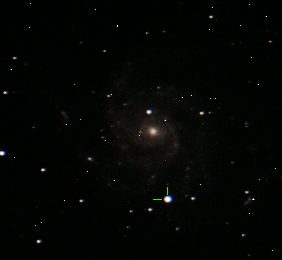
A close examination of thirteen Type Ia supernovae in the earliest days after their initial explosion reveals two distinct sub-populations.

This week about 500 astronomers met in Boston, MA for the 20th Cambridge Workshop on Cool stars, Stellar Systems, and the Sun (Cool Stars) meeting.
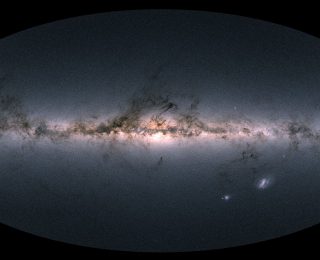
Could Gaia’s immense catalog of stellar positions help us find extraterrestrial intelligence?

Astronomy and exoplanet science are entering into an era of unprecedented precision. Check out Dr. Keivan Stassun’s plenary talk at #AAS232 to learn more!