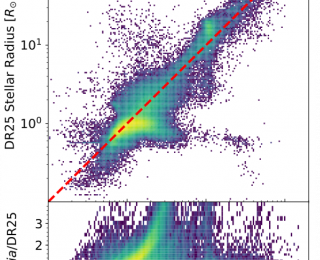
by Jessica Roberts | May 4, 2018 | Daily Paper Summaries
Using new Gaia data, the authors update the stellar radii for the majority of Kepler’s stars. While they find that most stars have similar radii to previous reported values, there are some large discrepancies.
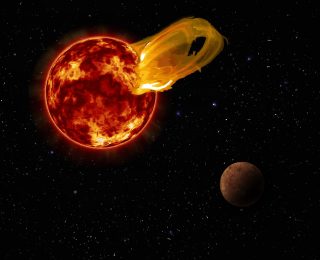
by Emma Foxell | Mar 15, 2018 | Daily Paper Summaries
What is responsible for the excess radio emission from our nearest star, Proxima Centauri? No alien radio stations required!
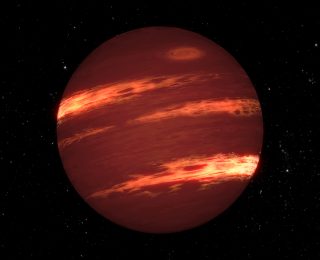
by Kerrin Hensley | Feb 21, 2018 | Daily Paper Summaries
In or out? Today’s paper explores whether or not an unusual object belongs to the AB Doradus moving group—and what it means if it does.
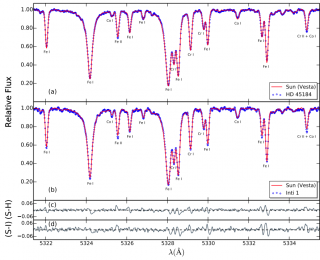
by Daniel Berke | Jan 23, 2018 | Daily Paper Summaries
After accidentally observing the wrong star this paper’s authors discovered a previously-unknown solar twin, a type of star which can help shed light on a number of questions in astronomy.

by Zephyr Penoyre | Dec 28, 2017 | Daily Paper Summaries
The light from a star is not constant, it varies as the layers of hot material move back and forth, clump and disperse. Most of these vibrations are visible, detectable, and well understood. But some bizarre new vibration is happening in stars, for which we have no clear path to an explanation.
by Leonardo dos Santos | Dec 23, 2017 | Daily Paper Summaries
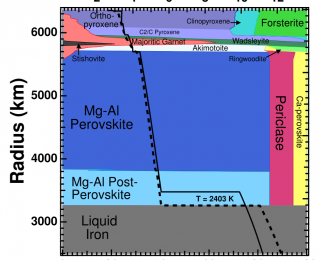
We can precisely measure chemical abundances for stars. This offers an intriguing possibility that we may, in the near future, start using these measurements to know more about the insides of rocky planets orbiting them.
