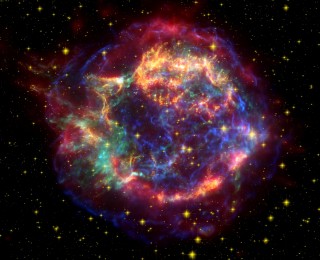
CSI: Universe
A supernova goes off. A star has died. Can its partner have anything to do with it?

A supernova goes off. A star has died. Can its partner have anything to do with it?
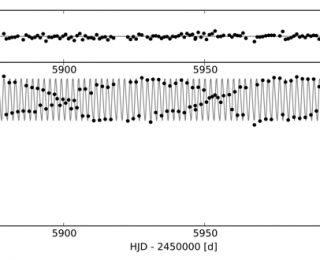
Cepheids’ pulsing brightness variations happen because the star’s temperature and radius is changing, and they occupy a unique niche of stellar evolution. We can learn a lot about what is physically happening inside stars during this tumultuous time through close observations. Or rather, we could learn a lot about what happens inside Cepheid variable stars, if only we knew their masses.
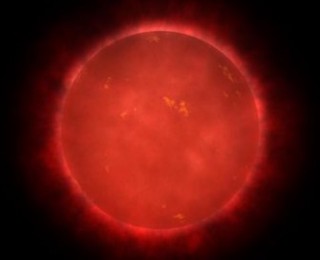
Heavy stars live like rock stars: they live fast, become big, and die young. Low mass stars, on the other hand, are more persistent, and live longer. Fusing hydrogen slow and steady wins the stellar age-race.
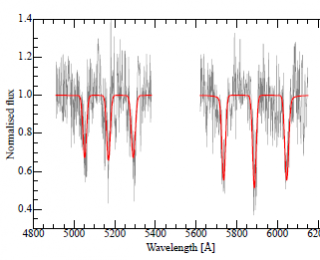
The galaxy is littered with white dwarfs, the burnt out remnants of stars that have run out of hydrogen fuel in their cores, but were too small to explode as supernovae. But far from being lifeless orbs, around a tenth of white dwarfs have powerful magnetic fields, a million times stronger than that of the Sun. How did these magnetic white dwarfs become such strong magnets? And just how many are there. The authors of this paper set out to answer the second of these questions, in the hope that it would shed light on the first.
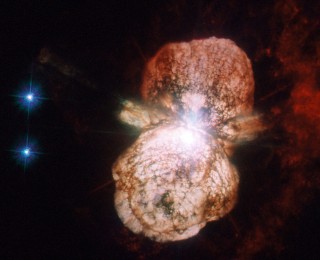
The massive binary star system Eta Carinae has been examined like never before in a recent study. Read on to hear the new discoveries from this approach, and the potential it opens for astrophysical research.
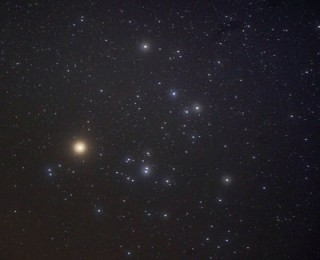
The Hyades underpins our understanding of stellar ages. If its age is wrong then a lot of other ages are wrong too…