Astrobites at AAS 239 Virtual Events: Day 1
We report on Day 1 of the virtual events based around the cancelled winter AAS meeting.

We report on Day 1 of the virtual events based around the cancelled winter AAS meeting.
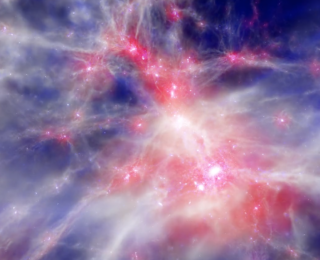
Many astronomers believe that AGN activity is responsible for suppressing star formation. However, it appears that maybe the past behaviour of AGN is what’s really to blame.
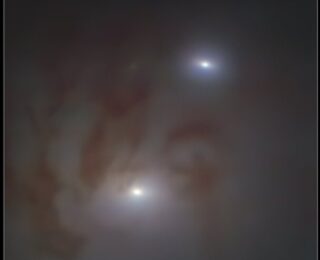
Today’s authors discovered not one, but two supermassive black holes! And they’re the closest pair to Earth that we’ve ever detected.
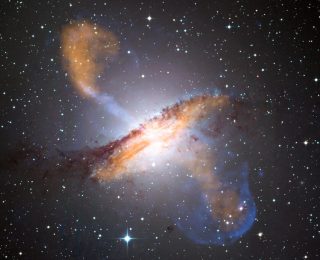
The authors of today’s paper dig deep into the debate of whether galaxy mergers are major players in triggering AGN at intermediate redshifts.
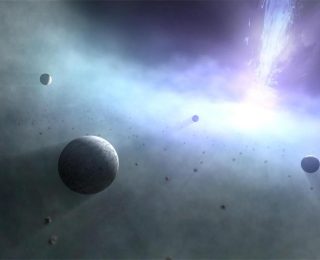
Supermassive black holes have a really nasty reputation for rendering galaxies uninhabitable, but this perception may be misguided. It’s possible that the radiation these vast beasts release while feasting could bring forth a bounty for life as we know it. Could organisms subsist on the light of an AGN sun?
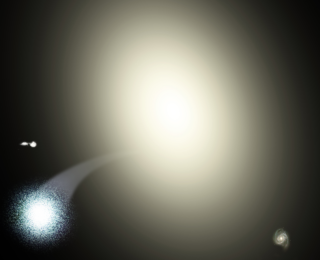
In today’s paper, astronomers try to figure out why one of M87’s globular clusters is leaving – and leaving fast.