• RSS
  • Submit a Guest Post
  • Undergraduates: Submit your Research!
  • Suggest a Paper Topic!
astrobites
  • About
    • About Astrobites
    • Meet the Authors
    • Statement of Inclusivity
    • Copyright & Permissions
  • Latest Research
    • Daily Paper Summaries
    • Classics
    • Undergrad Research
    • Physical Review Coverage
  • Beyond astro-ph
    • Beyond astro-ph Library
    • Interviews
    • Career Navigation
    • Personal Experiences
    • Current Events
    • Teaching with Astrobites
  • Guides
    • EM Spectrum
    • Galaxies & AGNs
    • Spectroscopy and Spectral Lines
    • Adaptive Optics
    • Gravitational Waves
    • Transient Astronomy
    • Astrophysical Software
    • Graduate School
    • Writing a personal statement for grad apps
    • First Observing Run
    • …More Guides!
Select Page
Astrobites at AAS 237: Day 2

Astrobites at AAS 237: Day 2

by Astrobites | Jan 13, 2021 | Current Events

We report on Day 2 of the virtual winter AAS meeting.

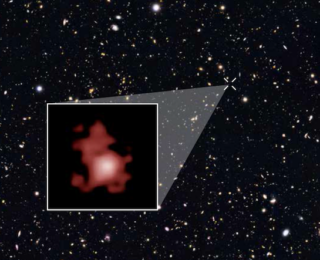
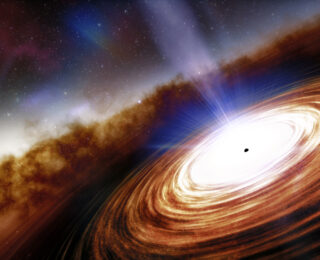
Pinning Down the Distance to the Farthest Galaxy Ever Observed

Pinning Down the Distance to the Farthest Galaxy Ever Observed

by Lukas Zalesky | Jan 4, 2021 | Daily Paper Summaries

Take a journey into the furthest reaches of our cosmos and learn about the most distant galaxy we have ever observed.
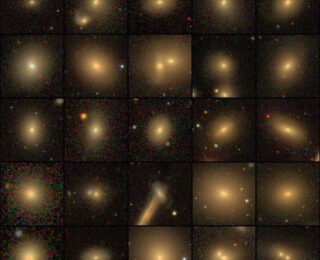
Red Dead Evolution

Red Dead Evolution

by Lukas Zalesky | Nov 18, 2020 | Daily Paper Summaries

Most galaxies take significant fractions of the age of the universe to noticeably change. Others transform themselves in the first two billion years of the universe. How does this happen?
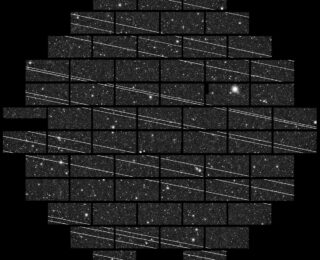
An Uncertain Future for the Night Skies

An Uncertain Future for the Night Skies

by Lukas Zalesky | Sep 25, 2020 | Current Events

The night sky is now destined to change due to plans which involve placing thousands of satellites into low Earth orbits. Is there a cause for concern?

Spot the Difference! Disentangling High-z Galaxies

Spot the Difference! Disentangling High-z Galaxies

by Lukas Zalesky | May 2, 2020 | Daily Paper Summaries

The early universe is a period of intense star formation across nearly all galaxies. Is it possible tell these galaxies apart from each other, when the universe was less than a few billion years old?
The Times They Are A-Changin’  (But the Stellar Mass Function of Massive Galaxies is Not!)

The Times They Are A-Changin’ (But the Stellar Mass Function of Massive Galaxies is Not!)

by Lukas Zalesky | Mar 5, 2020 | Daily Paper Summaries

Massive galaxies arise by the time the universe is less than half its current age. Wait four billion more years, and by how much do these galaxies grow? The answer may surprise you.

« Older Entries
Next Entries »

Loading

Follow our socials

  • Bluesky
  • Facebook
  • Instagram
  • RSS Feed

More Posts About

AAS AGN astronomy astrophysics binary stars black holes cosmology dark matter dwarf galaxies exoplanets galaxies galaxy evolution gravitational waves habitability JWST Kepler Milky Way observations planetary science planet formation protoplanetary disks radio astronomy simulations solar system spectroscopy star formation stars stellar evolution supernovae theory

Posts by Category

  • Accessibility
  • Applications
  • Beyond
  • Book Reviews
  • Career Navigation
  • Classics
  • Climate Change
  • Course Assignments
  • Crossposts
  • Current Events
  • Daily Paper Summaries
  • Game Reviews
  • Guides
  • Historical Astronomy
  • Instrumentation
  • Interviews
  • Outreach
  • Personal Experiences
  • PRJ
  • Quick Notes
  • Satellites
  • Teaching
  • Undergraduate Research

More Astronomy

  • AAS
  • AAS Nova
  • astro-ph
  • AstroBetter
  • APOD

Read Astrobites in Other Languages

  • Astrobitos (Spanish)
  • Astropontos (Portuguese)
  • staryab (Farsi)

Listen to Astrobites

  • astro[sound]bites

Discover More Incredible Science

  • ScienceBites Network
  • RSS

© 2026 Astrobites | All Rights Reserved | Supported by AAS | Designed by Elegant Themes | Powered by WordPress