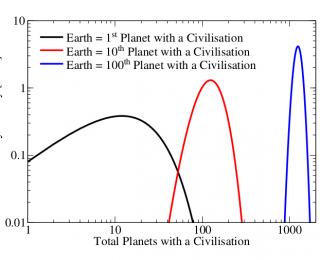
Estimating the number of intelligent civilizations from planet formation rates
By combining galaxy formation histories and planet formation models, we can estimate the number of potential civilizations in our Universe.

By combining galaxy formation histories and planet formation models, we can estimate the number of potential civilizations in our Universe.
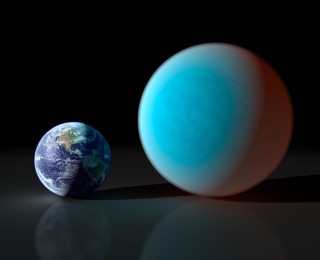
Why do some planets slightly more massive than Earth have gas envelopes, while others don’t?
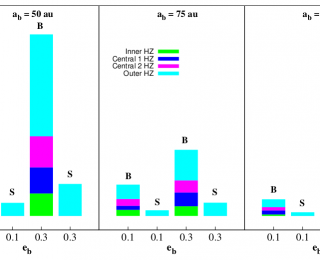
Planets in binary star systems can receive a sizable amount of water from asteroids getting perturbed out of their orbits
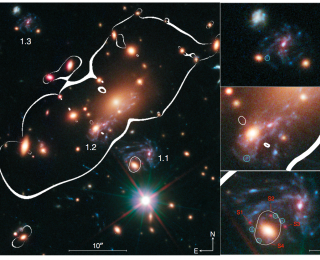
More than 50 years ago, a Norwegian astronomer named Sjur Refsdal outlined an interesting new method for calculating the Hubble constant. Last November, astronomers found the perfect test case.
Dark matter, in the form of primordial black holes, can potentially trigger Type Ia supernovae in white dwarfs.
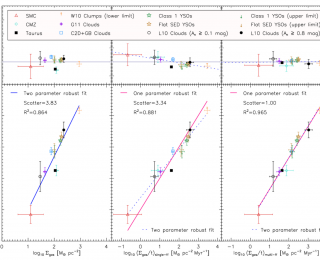
Molecular clouds are turbulent. Today’s paper explores how this fact affects the relationship between star formation rate and density from local clouds to distant galaxies.