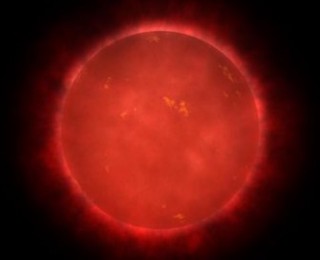
The Lives of the Longest Lived Stars
Heavy stars live like rock stars: they live fast, become big, and die young. Low mass stars, on the other hand, are more persistent, and live longer. Fusing hydrogen slow and steady wins the stellar age-race.

Heavy stars live like rock stars: they live fast, become big, and die young. Low mass stars, on the other hand, are more persistent, and live longer. Fusing hydrogen slow and steady wins the stellar age-race.

Planets seem to occur all over the place in the universe. However, it is still unknown how they form. The growth of objects larger than meter size is difficult because objects of this size quickly fall into the central star. This Astrobite gives a small overview of the meter-size barrier as found by Stuart J. Weidenschilling in 1977.
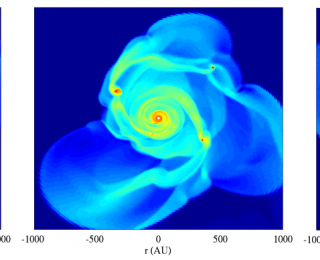
The first stars may have formed in clusters, rather than in isolation as previously thought. What would these clusters look like?
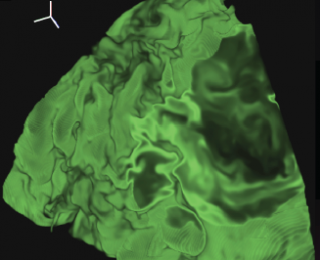
New 3D simulations that capture the last minutes of a massive star’s life reveal that its violently turbulent interior can affect how it dies.
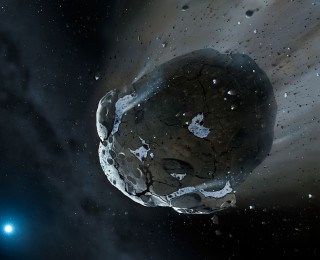
Earth’s oceans may have originated mainly from accreted impactors. But do planets in other systems experience the same water delivery mechanism? Or do they even get more water than our world? Find out why you would want to think about this and what the consequences might be.
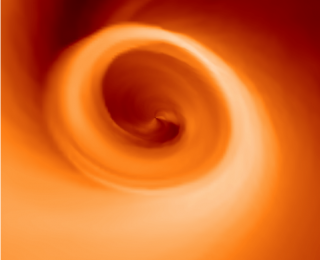
The rare (un)lucky star dies by means of black hole, which shreds the star to bits before swallowing it. It’s a spectacular death to observe, but one which is less bright and hot than we thought they would be…