by Caroline Morley | Dec 7, 2011 | Daily Paper Summaries
Venus transits the Sun, from the frame of the Earth, about twice every century, separated by eight years. The last one happened in 2004, and another is happening in June 2012. Observing the transmission spectrum during the 2012 transit—and comparing it to measured transmission spectra of the Earth, taken during lunar eclipses—will tell us how hard it will be to distinguish two planets that look identical in mass and radius, but have extremely different atmospheric properties.
by Lauren Weiss | Dec 2, 2011 | Daily Paper Summaries
Calculations say there should be evidence of alien life in our own solar system!
by Elisabeth Newton | Nov 9, 2011 | Daily Paper Summaries
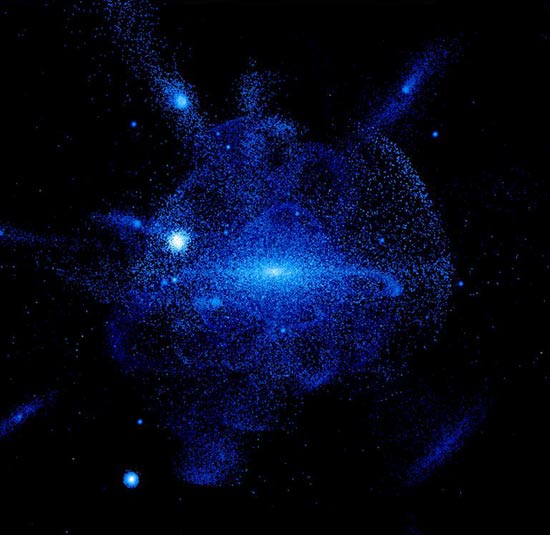
The Milky Way’s stellar halo – a roughly spherical distribution of stars surrounding our spiral galaxy – is a valuable tool for probing the early evolution of our galaxy. The stellar halo contains some of the oldest stars in our galaxy, whose properties reflect that of the environment in which they formed. This paper focuses on using cosmological simulations of galaxy formation to match the observed structure and kinematics (how the stars move) of stars in Milky Way’s halo.
by Nathan Sanders | Oct 31, 2011 | Daily Paper Summaries
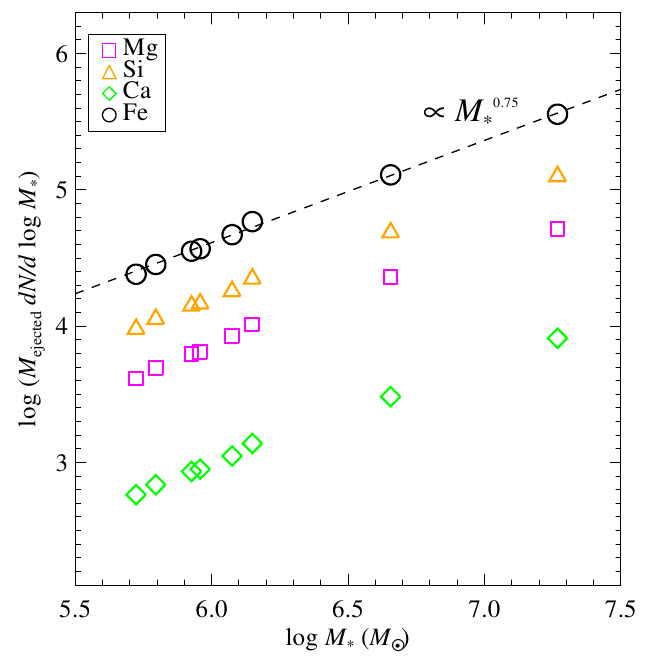
Some galaxies get all the metals, but the dSphs surrounding the Milky Way seem to have lost
by Guest | Oct 17, 2011 | Daily Paper Summaries
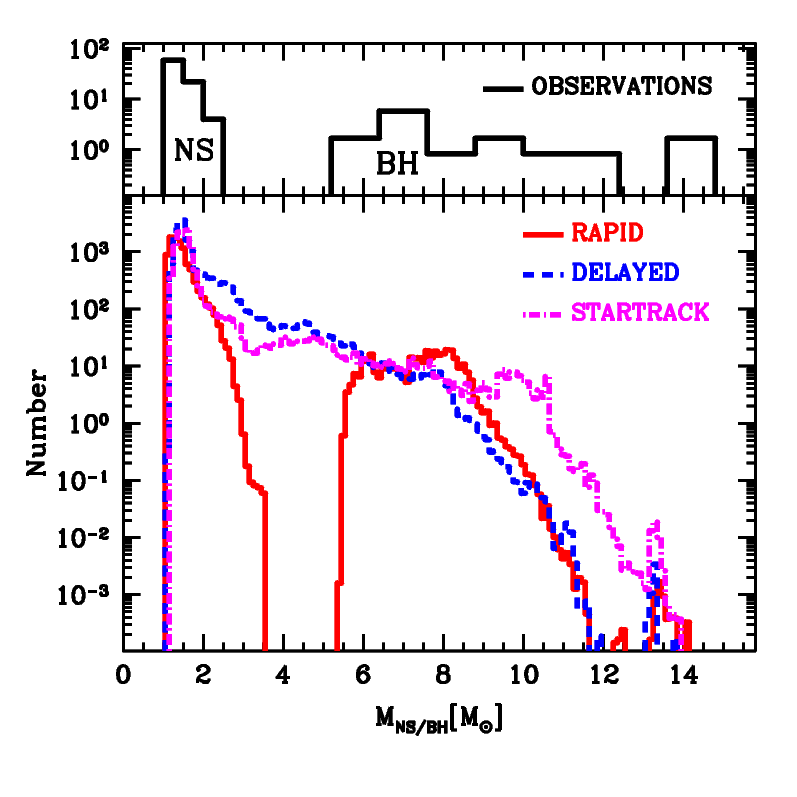
You might think that stars with an approximately continuous distribution of masses would lead to remnants with an approximately continuous distribution masses. But you’d be wrong.

by Lauren Weiss | Oct 6, 2011 | Daily Paper Summaries
Several weeks ago, the OPERA experiment announced that they had measured neutrinos travelling faster than the speed of light. The neutrinos, which traveled from CERN to the Gran Sasso Laboratory, arrived at the detector 60 nanoseconds earlier than light (with statistical errors of 6.9 ns and systematic errors of 7.4 ns).
