• RSS
  • Submit a Guest Post
  • Undergraduates: Submit your Research!
  • Suggest a Paper Topic!
astrobites
  • About
    • About Astrobites
    • Meet the Authors
    • Statement of Inclusivity
    • Copyright & Permissions
  • Latest Research
    • Daily Paper Summaries
    • Classics
    • Undergrad Research
    • Physical Review Coverage
  • Beyond astro-ph
    • Beyond astro-ph Library
    • Interviews
    • Career Navigation
    • Personal Experiences
    • Current Events
    • Teaching with Astrobites
  • Guides
    • EM Spectrum
    • Galaxies & AGNs
    • Spectroscopy and Spectral Lines
    • Adaptive Optics
    • Gravitational Waves
    • Transient Astronomy
    • Astrophysical Software
    • Graduate School
    • Writing a personal statement for grad apps
    • First Observing Run
    • …More Guides!
Select Page
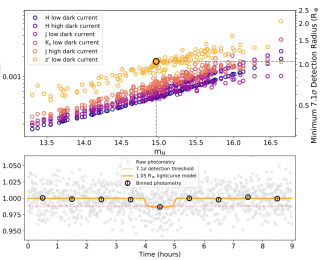
A step by step guide to finding planets around ultracool dwarfs

A step by step guide to finding planets around ultracool dwarfs

by Emma Foxell | Aug 19, 2019 | Daily Paper Summaries

Astronomers have been finding planets around M dwarf stars for a while. Can we go even cooler and find planets around the diverse L and T spectral group?

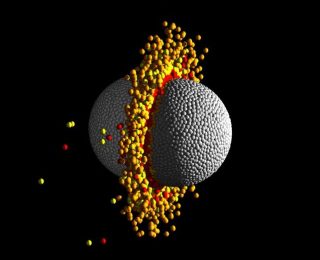
An interplanetary collision — in a distant planetary system

An interplanetary collision — in a distant planetary system

by Joanna Ramasawmy | Jul 29, 2019 | Crossposts, Daily Paper Summaries

Interplanetary collisions can explain a number of phenomena in our own solar system — here’s evidence of such a crash shaping the formation of two distant planets. Translate from an Astrobitos bite by Elena Gonzales Egea.
Peas in a Pod?

Peas in a Pod?

by Spencer Wallace | Jul 15, 2019 | Daily Paper Summaries

Neighboring exoplanets appear to come in similar sizes. But is this a result of observational bias?

Forecast calls for clear skies on WASP-96b

by Jamie Wilson | Jan 21, 2019 | Daily Paper Summaries

A cloud-free world offers the clearest view yet of an exoplanet atmosphere.
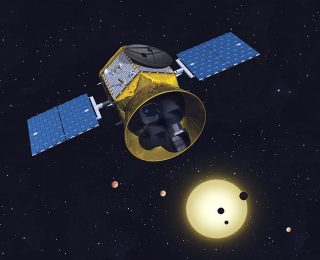
How to find exoplanets and ‘listen’ to their stars with TESS

How to find exoplanets and ‘listen’ to their stars with TESS

by Emma Foxell | Jan 17, 2019 | Daily Paper Summaries

Today’s post investigates how multitasking TESS is not only detecting exoplanets, but allowing us to find out more about their stars.
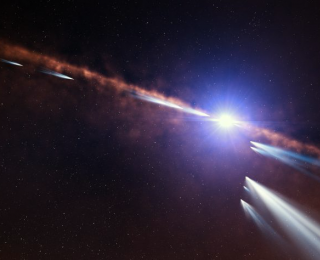
What is causing these Little Dippers?

What is causing these Little Dippers?

by Emma Foxell | Dec 11, 2018 | Daily Paper Summaries

Could exocomets be causing these strange shaped lightcurves?

« Older Entries
Next Entries »

Loading

Follow our socials

  • Bluesky
  • Facebook
  • Instagram
  • RSS Feed

More Posts About

AAS AGN astronomy astrophysics binary stars black holes cosmology dark matter dwarf galaxies exoplanets galaxies galaxy evolution gravitational waves habitability JWST Kepler Milky Way observations planetary science planet formation protoplanetary disks radio astronomy simulations solar system spectroscopy star formation stars stellar evolution supernovae theory

Posts by Category

  • Accessibility
  • Applications
  • Beyond
  • Book Reviews
  • Career Navigation
  • Classics
  • Climate Change
  • Course Assignments
  • Crossposts
  • Current Events
  • Daily Paper Summaries
  • Game Reviews
  • Guides
  • Historical Astronomy
  • Instrumentation
  • Interviews
  • Outreach
  • Personal Experiences
  • PRJ
  • Quick Notes
  • Satellites
  • Teaching
  • Undergraduate Research

More Astronomy

  • AAS
  • AAS Nova
  • astro-ph
  • AstroBetter
  • APOD

Read Astrobites in Other Languages

  • Astrobitos (Spanish)
  • Astropontos (Portuguese)
  • staryab (Farsi)

Listen to Astrobites

  • astro[sound]bites

Discover More Incredible Science

  • ScienceBites Network
  • RSS

© 2026 Astrobites | All Rights Reserved | Supported by AAS | Designed by Elegant Themes | Powered by WordPress