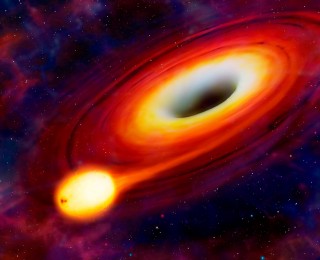
Another hungry black hole devours a star
Maksym et al. investigate a possible tidal flare event in Abell 1795.

Maksym et al. investigate a possible tidal flare event in Abell 1795.
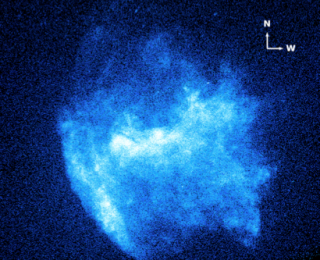
The authors discuss the possibility that the strangely-shaped supernova remnant W49B was created by a core-collapse supernova that formed strong bipolar jets instead of a spherical shockwave.
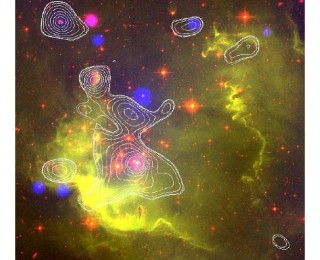
For the first time, diffuse X-ray emission from young stars is identified in the Small Magellanic Cloud (SMC), using data from Chandra.
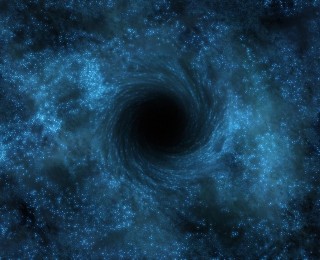
We know most galaxies host supermassive black holes at their centers, but how do they get so big? In this study, the authors investigate one of the smallest known supermassive black holes (weighing in at only 100,000 solar masses), to shed some light on what a young, accreting black hole might look like.
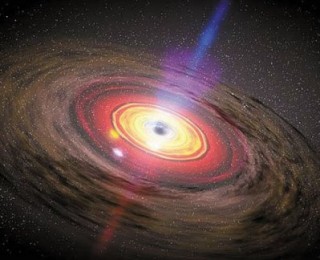
We know that supermassive black holes exist, but how did they get so big? In this paper, the authors seek to shed some light on their progenitors – rapidly accreting, intermediate-mass black holes.
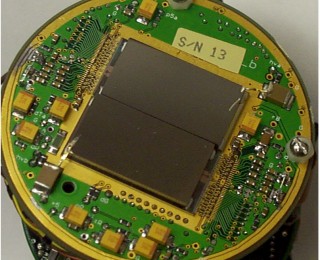
Why are there so few X-ray imaging polarimeters? This paper determines the intrinsic sensitivity of stacked imaging detectors to hard X-ray polarization.