• RSS
  • Submit a Guest Post
  • Undergraduates: Submit your Research!
  • Suggest a Paper Topic!
astrobites
  • About
    • About Astrobites
    • Meet the Authors
    • Statement of Inclusivity
    • Copyright & Permissions
  • Latest Research
    • Daily Paper Summaries
    • Classics
    • Undergrad Research
    • Physical Review Coverage
  • Beyond astro-ph
    • Beyond astro-ph Library
    • Interviews
    • Career Navigation
    • Personal Experiences
    • Current Events
    • Teaching with Astrobites
  • Guides
    • EM Spectrum
    • Galaxies & AGNs
    • Spectroscopy and Spectral Lines
    • Adaptive Optics
    • Gravitational Waves
    • Transient Astronomy
    • Astrophysical Software
    • Graduate School
    • Writing a personal statement for grad apps
    • First Observing Run
    • …More Guides!
Select Page
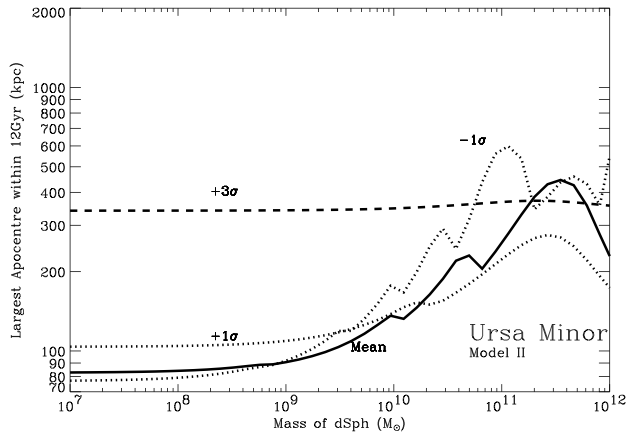
Where did the Milky Way Dwarfs come from?

Where did the Milky Way Dwarfs come from?

by Dan Gifford | Aug 23, 2011 | Daily Paper Summaries

Turning back the clock to study our host galaxy’s companions. Where did they come from?

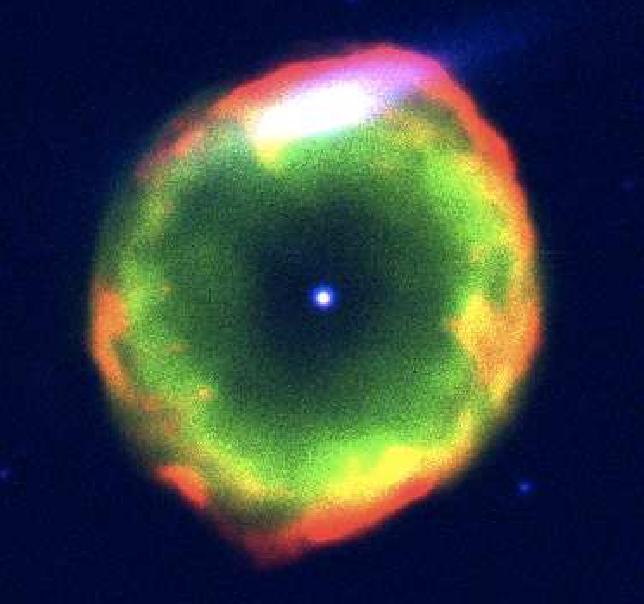
A planetary nebula with serious pollution problems

A planetary nebula with serious pollution problems

by Nathan Sanders | Aug 22, 2011 | Daily Paper Summaries

Miszalski et al. show that the well-known planetary nebula Abell 70 has a white dwarf companion at its center with a messy past.
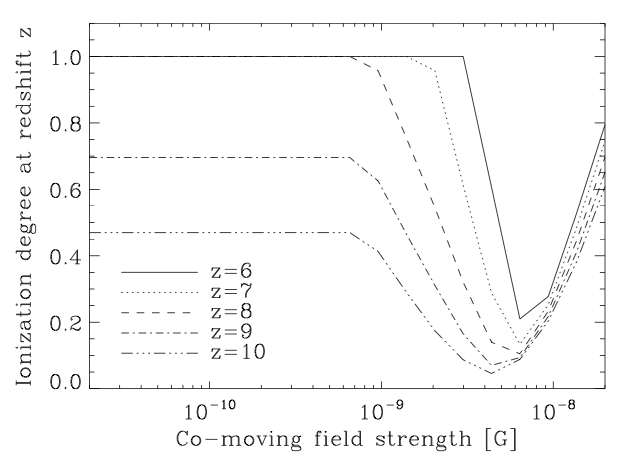
Using Reionization to constrain Primordial Magnetic Fields

Using Reionization to constrain Primordial Magnetic Fields

by jsureshcfa | Aug 21, 2011 | Daily Paper Summaries

The authors of this paper use modern constraints on reionization to estimate the strength of primordial magnetic fields at high redshift.

UR #1: Gamma-Ray Bursts and Protostars

by Astrobites | Aug 21, 2011 | Undergraduate Research

A couple of weeks ago we put out a call for descriptions of research being done by undergraduates, and we got a great response! Today we’re publishing the first installment.

The Moving Bits

The Moving Bits

by Katherine Rosenfeld | Aug 19, 2011 | Daily Paper Summaries

With increasingly large data sets and surveys, the problem of moving astronomical data around the world is non-trivial, but how fast and how accurately can this be done?

« Older Entries
Next Entries »

Loading

Follow our socials

  • Bluesky
  • Facebook
  • Instagram
  • RSS Feed

More Posts About

AAS AGN astronomy astrophysics binary stars black holes cosmology dark matter dwarf galaxies exoplanets galaxies galaxy evolution gravitational waves habitability JWST Kepler Milky Way observations planetary science planet formation protoplanetary disks radio astronomy simulations solar system spectroscopy star formation stars stellar evolution supernovae theory

Posts by Category

  • Accessibility
  • Applications
  • Beyond
  • Book Reviews
  • Career Navigation
  • Classics
  • Climate Change
  • Course Assignments
  • Crossposts
  • Current Events
  • Daily Paper Summaries
  • Game Reviews
  • Guides
  • Historical Astronomy
  • Instrumentation
  • Interviews
  • Outreach
  • Personal Experiences
  • PRJ
  • Quick Notes
  • Satellites
  • Teaching
  • Undergraduate Research

More Astronomy

  • AAS
  • AAS Nova
  • astro-ph
  • AstroBetter
  • APOD

Read Astrobites in Other Languages

  • Astrobitos (Spanish)
  • Astropontos (Portuguese)
  • staryab (Farsi)

Listen to Astrobites

  • astro[sound]bites

Discover More Incredible Science

  • ScienceBites Network
  • RSS

© 2026 Astrobites | All Rights Reserved | Supported by AAS | Designed by Elegant Themes | Powered by WordPress