by Lauren Weiss | Aug 14, 2011 | Daily Paper Summaries
Title: “SOPHIE velocimetry of Kepler transit candidates IV. KOI-196b: a non-inflated hot-Jupiter with a high albedo Authors: A. Santerne, A. S. Bonomo, G. Hébrard, M. Deleuil, C. Moutou, J.-M. Almenara, F. Bouchy, R. F. Díaz Institutions: Laboratoire d’Astrophysique de Marseille, Institute d’Astrophysique de Paris, Observatoire de Haute-Provence. In the search for planets around other stars, astronomers have stumbled upon a class of planets called “hot Jupiters,” which are large (like Jupiter) and close to their parent stars (and thus hot). What makes these planets interesting is their absurdly low densities, some of which are less dense than styrofoam! How did these planets achieve such low densities? These planets have been “inflated” due to an additional heat source, possibly from the tidal energy of the star or stellar radiation on the atmosphere. While the source of the hot Jupiter inflation remains a mystery, the plethora of inflated hot Jupiters testifies that inflation is common. However, not all hot Jupiters are inflated. Santerne et al. (2011) report the detection of a non-inflated hot Jupiter. This planet, formerly planetary candidate KOI-196.01 in the “Kepler Objects of Interest” (KOI) catalog, was discovered by the Kepler Mission and confirmed by the authors, who used high-precision radial velocity measurements from the SOPHIE instrument at the Observatory of Haute-Provence to calculate the mass of the planet and confirm its planetary nature. By supplementing the publicly available light curves from the Kepler Mission with their measurements from SOPHIE, the authors were able to very precisely determine the mass and radius of both the star and planet.The planet is 0.49 Jupiter masses and 0.841 Jupiter radii, giving it an average density 1.02 grams per cubic centimeter. For...
by Susanna Kohler | Aug 12, 2011 | Daily Paper Summaries
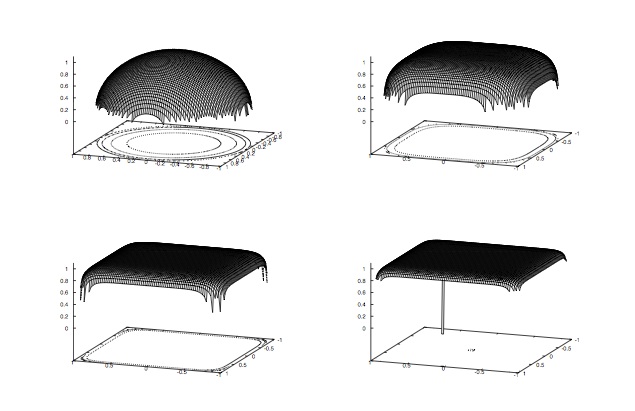
What happens to neutrons in the extreme environment found in a neutron star? According to these authors, they could deform to become cubes!
by Dan Gifford | Aug 9, 2011 | Daily Paper Summaries
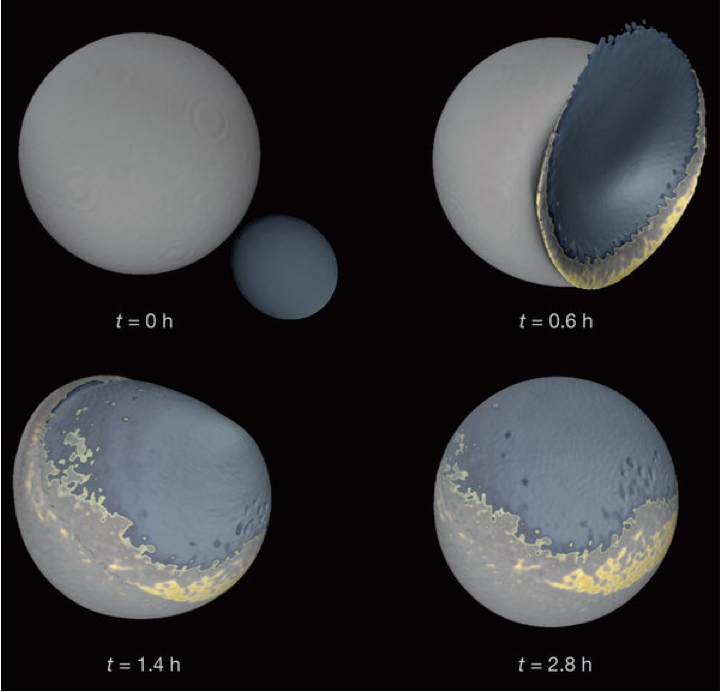
Astronomers think one impact may not have been enough to see the Moon as we do today. If two moons formed out of the massive collision first hypothesized, they could have merged which would explain the terrain dichotomy we see on the near and far sides of our Moon.
by Nathan Sanders | Aug 8, 2011 | Daily Paper Summaries
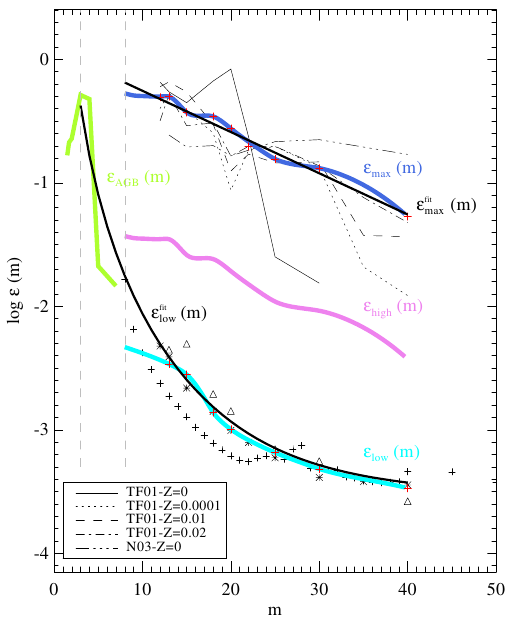
I just vacuumed my apartment and asked the question, ‘how does so much dust accumulate in one week?’ These authors ask a more scientifically interesting question: how can galaxies accumulate more than 100 million solar masses of dust in just a few hundred million years?
by Aaron Bray | Aug 6, 2011 | Daily Paper Summaries
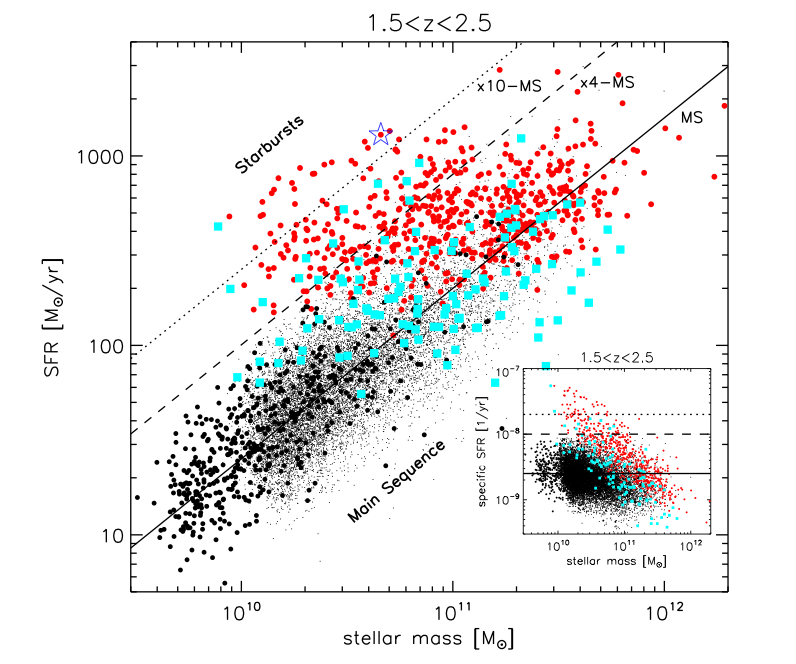
Starbursting galaxies are dramatic, but they may not be as important to the universe’s global star formation history as the more common spirals with their slow but steady stellar output.
