by Laurie Amen | Mar 11, 2026 | Daily Paper Summaries
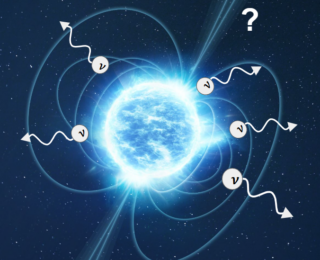
Today’s bite explores if highly magnetic compact objects called magnetars could explain where the observed background of high-energy neutrinos in our Universe comes from!
by Madison VanWyngarden | Mar 10, 2026 | Daily Paper Summaries
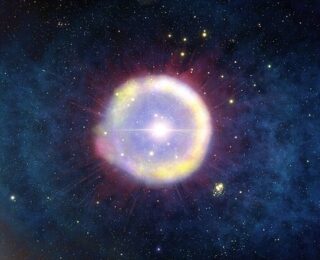
Today’s bite explores a new method to find the galaxies hosting the Universe’s first generation of stars

by Kelsie Taylor | Mar 9, 2026 | Daily Paper Summaries
Galaxy-modelers beware! Today’s bite will guide you through an analysis of CEERS2-588, a quirky, UV-luminous, early galaxy discovered by JWST that’s causing issues in our theoretical models!
by Skylar Grayson | Mar 7, 2026 | Daily Paper Summaries
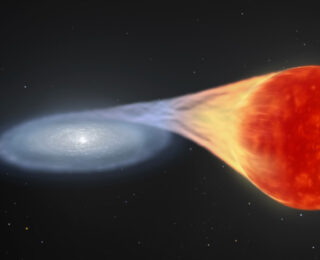
Today’s paper tests some recent claims that there is a bias in cosmological distance measurements!
by Munira Hoosain | Mar 6, 2026 | Daily Paper Summaries
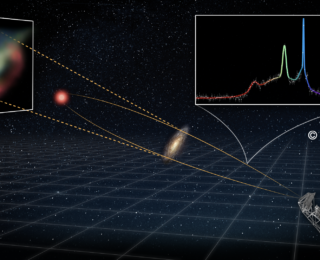
Space is full of unusual and (sometimes) quite powerful phenomena that cause light to behave in unexpected ways. Maser systems are one of these phenomena. The MeerKAT Radio Telescope recently detected the most luminous and distant hydroxyl (or OH) maser system – so intense it crossed the threshold from “mega-maser” to “giga-maser”. Discover why this system is so remarkable in this bite!

by Jayde Willingham | Mar 5, 2026 | Daily Paper Summaries
So we have a pretty good idea of how old the Universe is right? Well according to JWST data, maybe not? Rest assured, today’s bite gets to the bottom of the debate.
