by Andrew Emerick | Oct 1, 2015 | Daily Paper Summaries
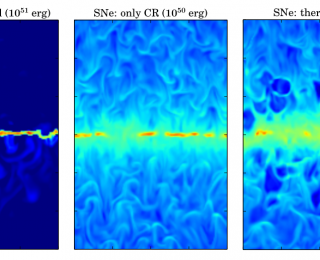
The energy injected into galaxies from dying stars through supernovae plays an important role in how they evolve in a process known as feedback. However, cosmic rays generated by supernovae may be equally important in constructing a complete picture of galaxy evolution. The authors of today’s astrobite investigate this by producing hydrodynamics simulations including supernovae, cosmic rays, and magnetic fields.
by Gudmundur Stefansson | Oct 1, 2015 | Daily Paper Summaries
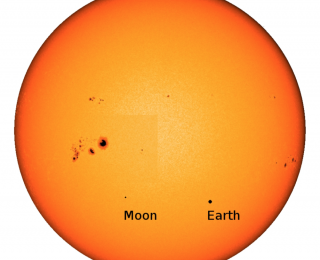
How do you observe an Earth transit, from Earth? You use some of the Solar System’s largest mirrors. The authors did. They found an anomaly.
by Meredith Rawls | Sep 29, 2015 | Daily Paper Summaries
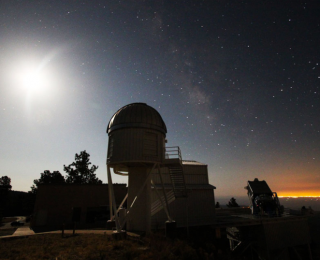
The three-year APOGEE survey was designed to target red giant stars in the Milky Way using near-infrared light, and today’s paper marks the final data release: half a million spectra of 146,000 stars. This treasure trove of data will be put to good use for years to come.
by David Wilson | Sep 28, 2015 | Daily Paper Summaries
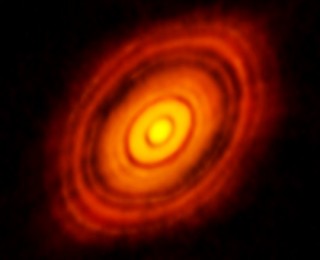
Nearly a year ago, the ALMA collaboration released this stunning image of the young star HL Tau. The sub-millimeter wavelengths of light that ALMA detects revealed a vast disc of gas and dust, several times larger than Neptune’s orbit. Intriguingly, the disc was divided up into a series of well-defined, concentric rings.
The cause of the rings seemed clear: There must be planets around HL Tau, their gravity sculpting the gas and sweeping out the dark gaps in the disc.
by Stacy Kim | Sep 23, 2015 | Daily Paper Summaries
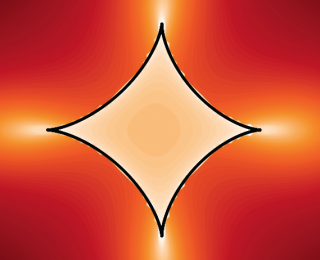
When the stars align, you just might catch a planet, a black hole, or a binary star—but it’s hard to measure its mass! What does it take to do so?
by Michael Zevin | Sep 22, 2015 | Daily Paper Summaries
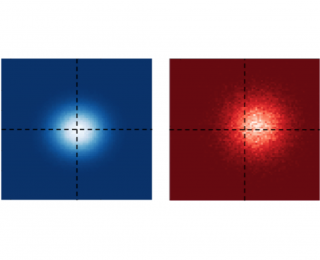
There are more moons than planets in our Solar System that harbor liquid water, and these moons may offer us the best chances of finding life off of Earth. Today’s paper takes the search for habitable moons a step further by investigating how telescopes of the near future might allow us to see and characterize these moons around exoplanets.
