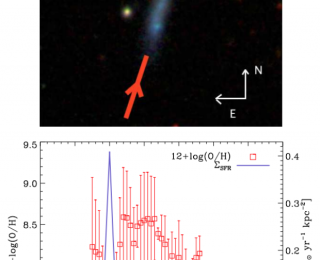
Feeding on the Cosmic Web
Observations of dwarf galaxies show that sites of active star formation have fewer metals. These galaxies may have been diluted by the impact of pristine gas from the cosmic web.

Observations of dwarf galaxies show that sites of active star formation have fewer metals. These galaxies may have been diluted by the impact of pristine gas from the cosmic web.
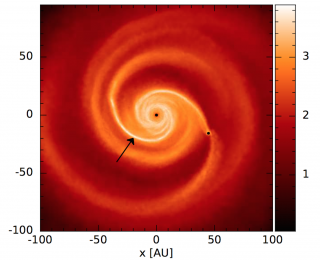
How to form clumps in the intermediate ranges of massive protoplanetary disks? Could these later be planets?
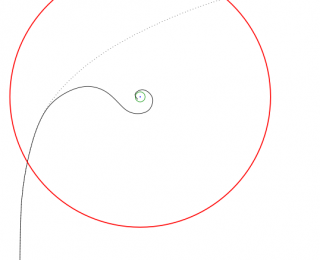
A model that needs fewest parameters to explain a scenario is favourable. The fact that mm-size dust grains (chondrules) are present in the entire solar system brings rise to the question, whether all bigger solid objects are a collection of chondrules.
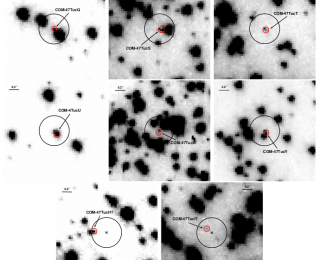
Images from the Hubble Space Telescope show that there are previously unknown white dwarfs orbiting around pulsar companions.
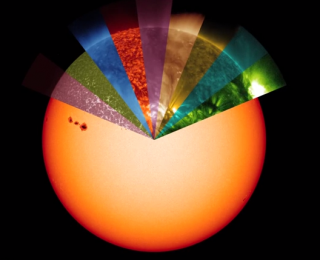
Does the Sun shine in high-energy gamma rays? Apparently so, in the form of a halo surrounding itself. But certain features of this gamma-ray halo are perplexing.
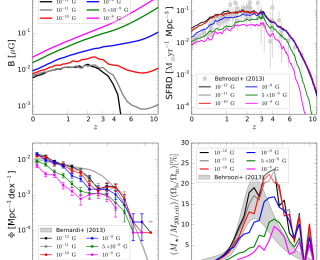
Although magnetic fields exist virtually everywhere, we still do not know quite a lot about the role they play in the evolution of our Universe. On galaxy scales and larger, they can be difficult to observe, but may play a crucial role in how they evolve. Today’s astrobite discusses work done to try and understand how initially weak fields in the early Universe can affect galaxy evolution over time.