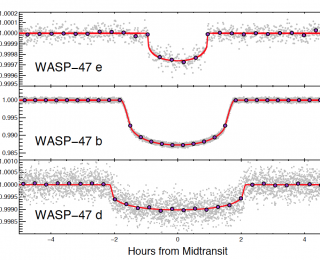
WASP-47b: A Hot Jupiter with Friends
What might be the strangest architecture yet of an exoplanetary system was discovered, and it raises big questions as to how planetary systems form and evolve.

What might be the strangest architecture yet of an exoplanetary system was discovered, and it raises big questions as to how planetary systems form and evolve.
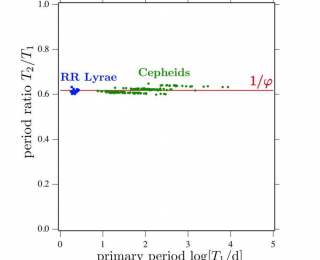
Some variable stars seem to be “golden”, but is this property fundamental or just chance?
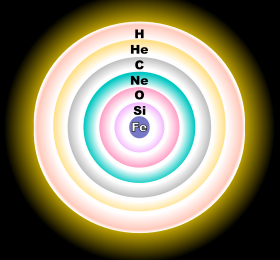
How does hydrogen affect supernovae? A new theory explores inconsistencies between theory and observation.
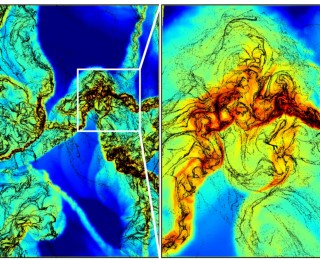
Molecular clouds, where new stars are born, are made of two components: gas and dust. The gas is mostly hydrogen, and the dust is made of elements crucial for forming planets and people, like silicon and carbon. Today’s paper shows that these two components behave very differently in a simulated molecular cloud. This could have exciting consequences for the growth of dust and the formation of stars and planets.
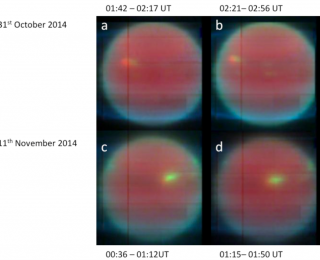
A bright spot on Uranus triggered an international push to figure out what exactly was going on. Here is a first look at the bizarre weather patters in the atmosphere of our distance neighbor.
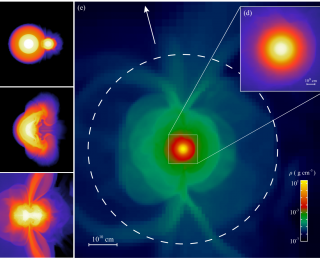
A dry planet and one with a thick atmosphere close together seems to be very weird. How about smashing one with a huge impactor?