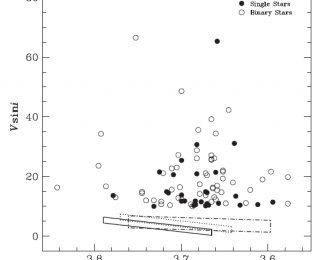
On and On They Spin
Nothing sits still in our Universe. Like planets, stars rotate. The authors of this paper found certain types of stars unexpectedly display rapid rotations when they are not supposed to.

Nothing sits still in our Universe. Like planets, stars rotate. The authors of this paper found certain types of stars unexpectedly display rapid rotations when they are not supposed to.
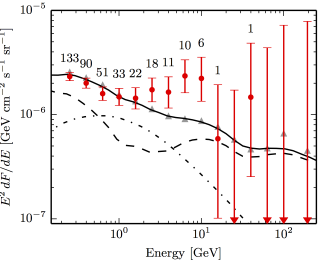
If dark matter particles can collide to release gamma-rays, the best place to see them will be in the centers of dwarf galaxies. Archival Fermi-LAT images around Reticulum 2 show the first ever detection of gamma-rays from a dwarf galaxy. Dark matter detection may be close at hand!
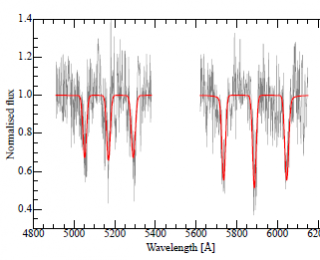
The galaxy is littered with white dwarfs, the burnt out remnants of stars that have run out of hydrogen fuel in their cores, but were too small to explode as supernovae. But far from being lifeless orbs, around a tenth of white dwarfs have powerful magnetic fields, a million times stronger than that of the Sun. How did these magnetic white dwarfs become such strong magnets? And just how many are there. The authors of this paper set out to answer the second of these questions, in the hope that it would shed light on the first.
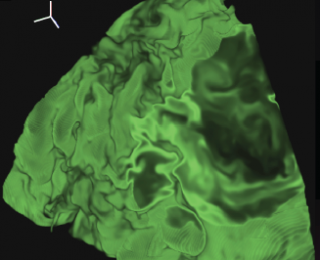
New 3D simulations that capture the last minutes of a massive star’s life reveal that its violently turbulent interior can affect how it dies.
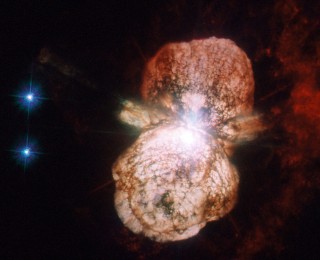
The massive binary star system Eta Carinae has been examined like never before in a recent study. Read on to hear the new discoveries from this approach, and the potential it opens for astrophysical research.
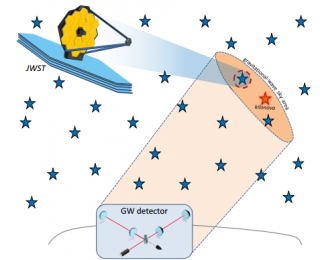
The James Webb Telescope and LIGO may team up to study some of the most energetic events in our universe.