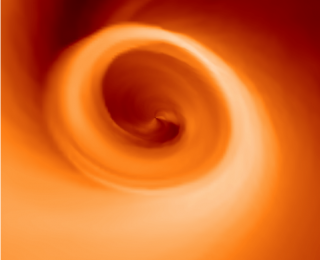
Corpse too Bright? Make it Bigger!
The rare (un)lucky star dies by means of black hole, which shreds the star to bits before swallowing it. It’s a spectacular death to observe, but one which is less bright and hot than we thought they would be…

The rare (un)lucky star dies by means of black hole, which shreds the star to bits before swallowing it. It’s a spectacular death to observe, but one which is less bright and hot than we thought they would be…
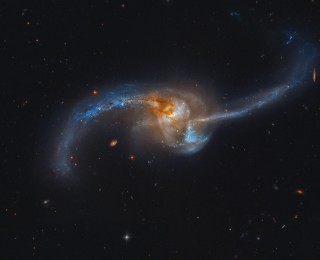
By measuring the black hole mass and velocity dispersion of currently merging galaxies each in various stages of a merger, the authors conclude that the growth of the central super massive black hole occurs in the early stages of each merger and outpaces any bursts of star formation or central bulge growth.

Today’s paper introduces a project called astroEDU. They’re aiming to make astronomy learning resources, like those you can find on Wikiversity, easier to find and of higher quality. To do this, the authors introduce a peer-review structure for education materials modeled on the one widely-accepted for scholarly research.
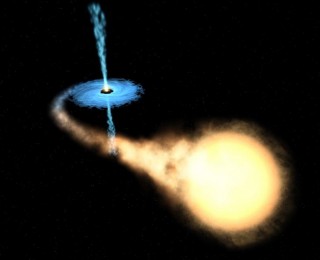
Reproducing the observed star formation history of galaxies in simulations is a fantastic test of our understanding of galaxy evolution. This is regulated strongly by “feedback”, for example, from supernova. Today’s astrobite discusses feedback from high mass X-ray binaries.
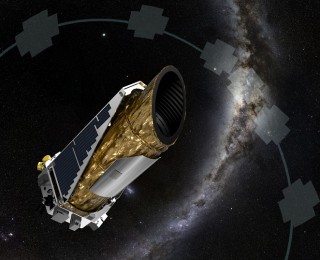
A new analysis technique, that fits simultaneously for light-curve systematics and transit signals, finds 36 planet candidates in the K2 dataset — Kepler is still in the game!
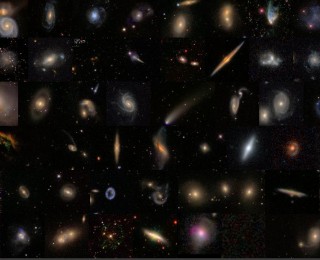
This paper reports the results of a cosmological simulation, and how smooth accretion and mergers affect three important aspects of galaxy formation: stellar mass growth, size increase, and morphology changes.