• RSS
  • Submit a Guest Post
  • Undergraduates: Submit your Research!
  • Suggest a Paper Topic!
astrobites
  • About
    • About Astrobites
    • Meet the Authors
    • Statement of Inclusivity
    • Copyright & Permissions
  • Latest Research
    • Daily Paper Summaries
    • Classics
    • Undergrad Research
    • Physical Review Coverage
  • Beyond astro-ph
    • Beyond astro-ph Library
    • Interviews
    • Career Navigation
    • Personal Experiences
    • Current Events
    • Teaching with Astrobites
  • Guides
    • EM Spectrum
    • Galaxies & AGNs
    • Spectroscopy and Spectral Lines
    • Adaptive Optics
    • Gravitational Waves
    • Transient Astronomy
    • Astrophysical Software
    • Graduate School
    • Writing a personal statement for grad apps
    • First Observing Run
    • …More Guides!
Select Page
Evaporating Envelopes for Earth-like Results

Evaporating Envelopes for Earth-like Results

by Jaime Green | Feb 11, 2015 | Daily Paper Summaries

Could the properties of an M-dwarf that might make it inhospitable also give it transformative powers? Could the star’s gravity and violence strip away a planet’s thick atmosphere, or envelope, to reveal a habitable core?
SN1997bs’s True Identity: Impostor or Not?

SN1997bs’s True Identity: Impostor or Not?

by Ashley Villar | Feb 10, 2015 | Daily Paper Summaries

SN1997bs has been labelled an impostor for years, but could it be the real deal?
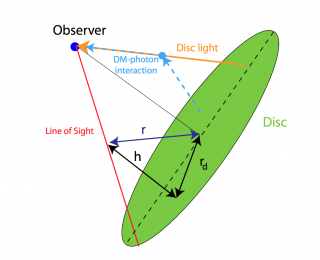
Just How Dark is Dark Matter?

Just How Dark is Dark Matter?

by Jesse Feddersen | Feb 9, 2015 | Daily Paper Summaries

How do you get a glimpse of dark matter? Stare really hard at the outskirts of galaxies and hope the matter isn’t totally dark.
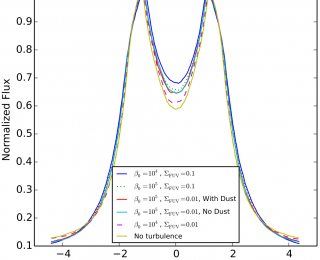
Sneak a peek on the cause of death of protoplanetary disks

Sneak a peek on the cause of death of protoplanetary disks

by Tim Lichtenberg | Feb 6, 2015 | Daily Paper Summaries

Why do planetary disks fade away so fast? A leading candidate as villain in this story is turbulence. Using the combined strengths of sophisticated theoretical models and observations, we might be able to find out if this is true!
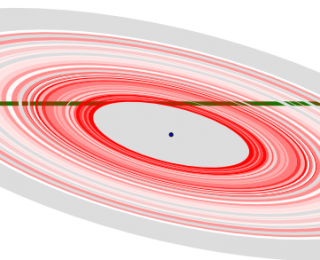
Rings around another world may have been sculpted by exomoons

Rings around another world may have been sculpted by exomoons

by Ruth Angus | Feb 5, 2015 | Daily Paper Summaries

Rings have been detected in another Solar system and, just like the rings of Saturn, they may have been carved out by exomoons.
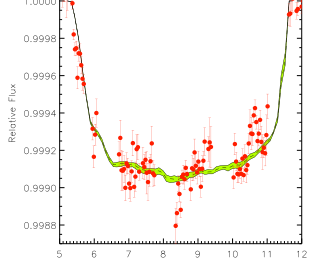
Using observations from home to improve the transit method

Using observations from home to improve the transit method

by Michael Küffmeier | Feb 3, 2015 | Daily Paper Summaries

Most exoplanets are and have been detected by the transit method. Maybe, we can improve the method even further by drawing conclusions from the recent Venus transits in 2004 and 2012.

« Older Entries
Next Entries »

Loading

Follow our socials

  • Bluesky
  • Facebook
  • Instagram
  • RSS Feed

More Posts About

AAS AGN astronomy astrophysics binary stars black holes cosmology dark matter dwarf galaxies exoplanets galaxies galaxy evolution gravitational waves habitability JWST Kepler Milky Way observations planetary science planet formation protoplanetary disks radio astronomy simulations solar system spectroscopy star formation stars stellar evolution supernovae theory

Posts by Category

  • Accessibility
  • Applications
  • Beyond
  • Book Reviews
  • Career Navigation
  • Classics
  • Climate Change
  • Course Assignments
  • Crossposts
  • Current Events
  • Daily Paper Summaries
  • Game Reviews
  • Guides
  • Historical Astronomy
  • Instrumentation
  • Interviews
  • Outreach
  • Personal Experiences
  • PRJ
  • Quick Notes
  • Satellites
  • Teaching
  • Undergraduate Research

More Astronomy

  • AAS
  • AAS Nova
  • astro-ph
  • AstroBetter
  • APOD

Read Astrobites in Other Languages

  • Astrobitos (Spanish)
  • Astropontos (Portuguese)
  • staryab (Farsi)

Listen to Astrobites

  • astro[sound]bites

Discover More Incredible Science

  • ScienceBites Network
  • RSS

© 2026 Astrobites | All Rights Reserved | Supported by AAS | Designed by Elegant Themes | Powered by WordPress