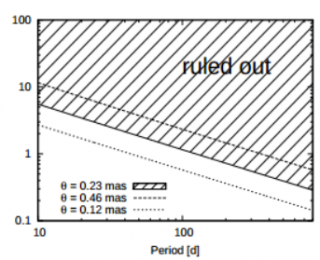
(Not) Detecting Planets around Brown Dwarfs with Radio Waves
Forbich, Berger, and Reid attempt to use a large radio array to detect stellar wobbles induced by orbiting planets at larger separations than are usually probed

Forbich, Berger, and Reid attempt to use a large radio array to detect stellar wobbles induced by orbiting planets at larger separations than are usually probed
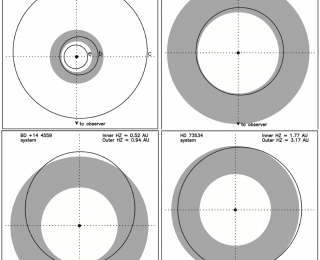
The search for exoplanets in their habitable zones continues. But exomoons could be habitable, too! This paper models hypothetical exomoons in four real systems to determine the habitability of moons around planets that don’t necessarily stay in the habitable zone.
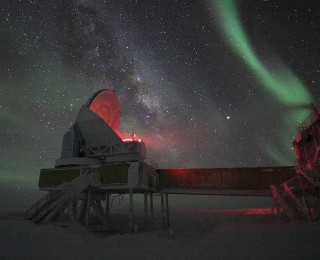
Gravitational lensing causes distortions in the polarization of the Cosmic Microwave Background. In this astrobite, we discuss recent results from the South Pole Telescope collaboration measuring patterns caused by lensing in the CMB polarization. What do these patterns tell us about the Universe?
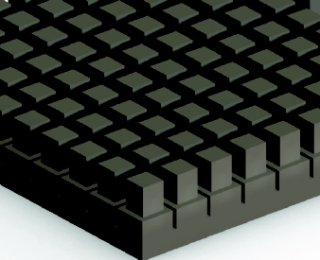
Anti-reflection coatings aren’t just for your glasses — telescope lenses need them too! Here we look at a new technique for reducing reflections in lenses made of silicon.
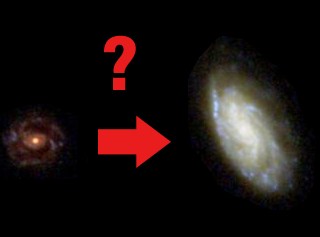
Galaxies have more than doubled in size since they first formed, but why?
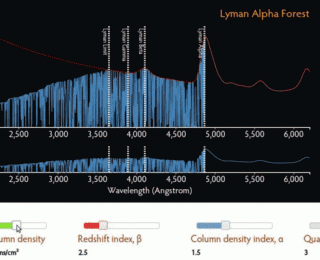
Gas in the Universe went from being mostly neutral to mostly ionized as the first galaxies formed, and the signature of this process is imprinted in quasar spectra. The review of the classic paper by Gunn & Peterson continues in this second in the three-part series.