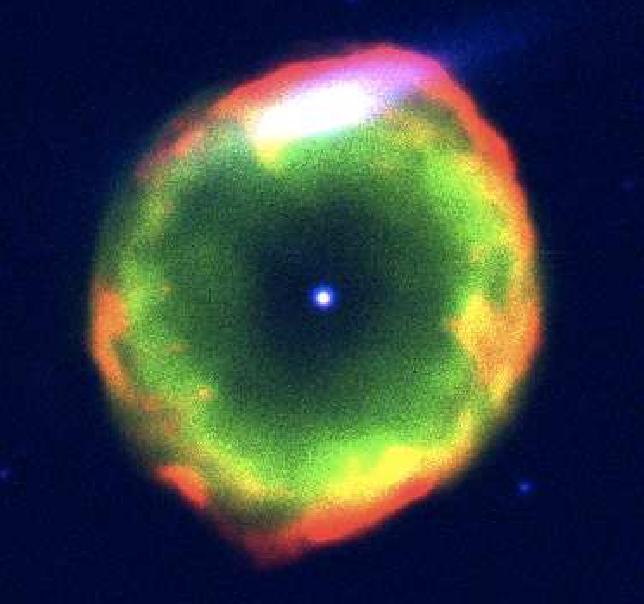
A planetary nebula with serious pollution problems
Miszalski et al. show that the well-known planetary nebula Abell 70 has a white dwarf companion at its center with a messy past.

Miszalski et al. show that the well-known planetary nebula Abell 70 has a white dwarf companion at its center with a messy past.
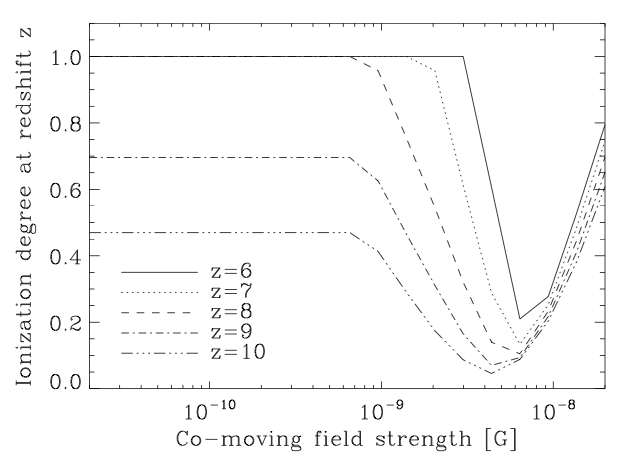
The authors of this paper use modern constraints on reionization to estimate the strength of primordial magnetic fields at high redshift.

With increasingly large data sets and surveys, the problem of moving astronomical data around the world is non-trivial, but how fast and how accurately can this be done?
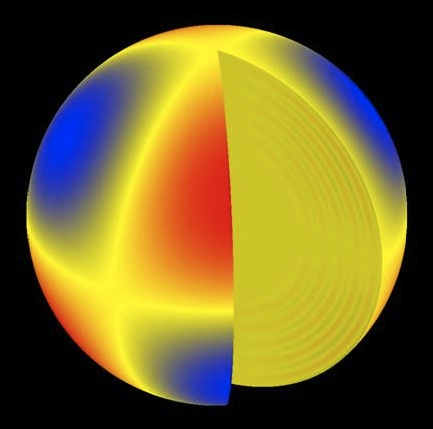
If there’s one type of star you’d think astronomers would know a lot about, it’s probably solar-type stars. After all, humans have been staring at our very near neighbor for millennia and in the recent century have dedicated entire space missions to studying this archetype. But there is always more to be learned and new tools like asteroseismology continue to open up avenues of study previously closed.

Instead of looking at a paper of recent scientific results published on the arXiv, we’re going to talk about the arXiv itself. Sunday was the twentieth anniversary of the first submission to the predecessor of arXiv.org, the preprint server that all use so often today. Paul Ginsparg, the developer of the arXiv, wrote a fascinating article recognizing how the way that scientists share information and publications has changed incredibly over his lifetime.
In this paper, the author proposes that the departure from this simple scaling with mass arises because of a simple fact: the natal molecular cloud must first fragment into clumps, which must in turn fragment into stars.