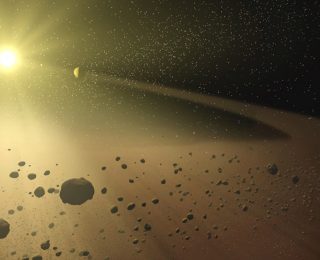
by Kerrin Hensley | Apr 10, 2017 | Daily Paper Summaries
Interstellar space should be littered with debris ejected during the formation of planetary systems—but how much? Engelhardt et al. use solar system surveys and simulations to place an upper limit on the number density of asteroids and comets roaming the Milky Way without a parent star.
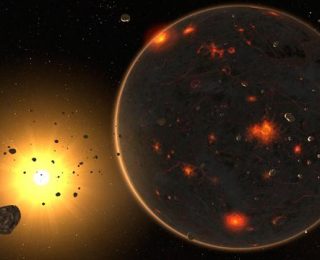
by Michael Hammer | Feb 10, 2017 | Daily Paper Summaries
About 3.8 billion years ago, large impactors were still pelting the Moon, creating huge craters that have survived to this day. Today’s paper explores whether asteroids from the asteroid belt could have been responsible for the majority of these impacts.
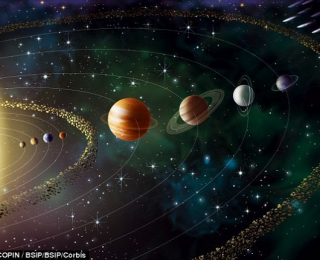
by Tim Lichtenberg | Nov 1, 2016 | Daily Paper Summaries
The puzzling architecture of the Solar system has long been a headache for planetary dynamicists. An alternative model of the gas giants’ movements may shed new light on the issue.
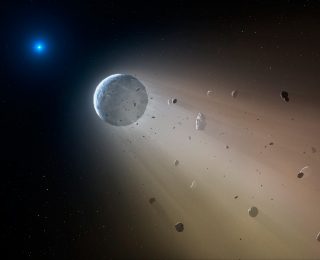
by Matthew Green | Sep 7, 2016 | Daily Paper Summaries
Measuring exoplanet composition by studying a white dwarf’s atmosphere
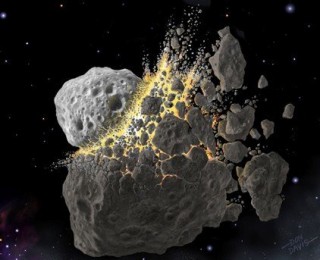
by Tim Lichtenberg | Mar 3, 2016 | Daily Paper Summaries
Meteorites originate from violent collisions between asteroids. But can we be sure about that? And what can we learn at all if we do not include ekpyrotic brane cosmologies?
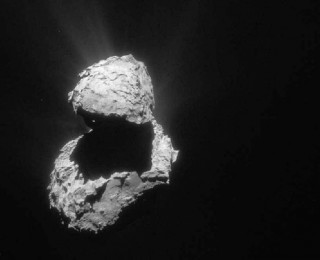
by Michael Küffmeier | Dec 2, 2015 | Daily Paper Summaries, Guides
More than a year ago, scientists managed to land on a comet for the very first time in human history. Read on to get a compact overview of some of the most important results of the mission obtained so far.
